Best Time of Year to Get IPL in Colorado

If you're considering an IPL Photofacial in Denver, timing your treatment can make a difference.
Colorado may have snowy winters and cold temperatures, but that doesn't mean our skin gets a break from the sun. At higher elevations, UV exposure remains an important consideration, and snow can reflect UV radiation back toward the skin. The EPA notes that UV intensity increases with altitude and that reflective surfaces such as snow can increase exposure.
Because IPL targets pigment in the skin, recent tanning and significant sun exposure can affect whether you're an appropriate candidate for treatment.
So, what is the best time of year to get IPL in Colorado?
For many patients, fall and winter are the easiest seasons to schedule a series of IPL treatments, with early spring sometimes providing another good window.
But there's more to the answer than simply waiting for cold weather.
When Is the Best Time to Get IPL in Denver?
For many Denver patients, the most convenient IPL season is approximately:
October through early spring
Why?
During these months, many people naturally spend less time outdoors, wear more protective clothing, and have fewer vacations involving beaches, pools, and prolonged sun exposure.
UV intensity also generally declines in fall and is lowest in winter, although UV protection is still necessary year-round.
This can make fall and winter particularly convenient for completing an IPL treatment series for sun damage, brown spots, freckles, redness, and visible vessels.
Why Does Sun Exposure Matter Before IPL?
At Denver Dream Med Spa, we use Lumecca IPL by InMode.
IPL works by delivering light energy that can be absorbed by specific targets within the skin, including pigment.
That's one reason tanning and recent significant sun exposure matter.
InMode's Lumecca patient guidance specifically recommends avoiding direct, excessive sun exposure or tanning for one month before treatment.
A tan represents increased melanin in the skin.
Because IPL interacts with pigment, treating recently tanned skin can change how the light energy is absorbed and may increase the risk of unwanted skin reactions.
That's why it's important to tell your provider about:
Recent sun exposure
Tanning
Outdoor vacations
Ski trips
Hiking
Outdoor sports
Upcoming sunny travel
Don't hide a tan because you don't want to reschedule your appointment.
Skin safety is more important than staying on the calendar.
Why Fall Is a Great Time for IPL in Colorado
For many people, fall is one of the best times to begin IPL.
After summer, you may suddenly notice everything the season left behind:
Brown sun spots
Freckles
Uneven pigmentation
Redness
Visible capillaries
Blotchy skin tone
Once your summer tan and recent significant sun exposure have resolved and your provider determines you're an appropriate candidate, fall can be an ideal time to start addressing visible photodamage.
Beginning in fall also gives you several months before the next summer season.
Why Winter Is Popular for IPL in Denver
Winter is another popular IPL season.
People often assume this is simply because the temperature is cold.
That's not really the reason.
Cold weather doesn't make IPL work better.
Winter is convenient because UV intensity is generally lower and many patients have fewer prolonged outdoor sun exposures.
That can make it easier to protect treated skin and complete a treatment series.
But Colorado winters come with an important warning:
Snow does not mean zero UV exposure.
Colorado Snow Can Still Mean Significant UV Exposure
If you live in Denver, you've probably experienced a sunny winter day that feels surprisingly intense.
There's a reason.
The EPA notes that UV radiation increases with elevation. It also warns that snow can reflect UV radiation, increasing exposure.
So if you're getting IPL during ski season, don't assume your skin is protected simply because it's January.
A weekend skiing in Breckenridge, Vail, Keystone, Winter Park, or another high-altitude destination can involve substantial UV exposure.
Your provider needs to know about those plans.
Can I Get IPL During Ski Season?
Potentially—but your ski schedule matters.
If you're spending significant time outdoors at altitude, especially with your face exposed, discuss this with your provider before scheduling IPL.
You may need to plan treatments around:
ski trips → IPL → additional ski trips
rather than simply booking IPL because it's winter.
InMode advises avoiding direct sunlight and tanning after Lumecca treatment because skin may be more sensitive to sunlight immediately afterward.
Winter can be an excellent IPL season.
Winter does not mean sun exposure doesn't matter.
Is Spring a Good Time for IPL?
Spring can still be a good time for IPL, particularly early spring, depending on your lifestyle and sun exposure.
The issue is that Colorado residents often start spending considerably more time outside as the weather improves.
That can mean:
Hiking
Running
Cycling
Patio time
Spring skiing
Gardening
Outdoor sports
Travel
UV levels also begin increasing as we move toward spring and summer.
If you're planning an IPL series in spring, consider your upcoming calendar—not just today's weather.
Can You Get IPL in the Summer?
Summer IPL isn't automatically impossible.
But it often requires more careful planning around sun exposure.
Summer may not be the most convenient time for IPL if you're:
At the pool every weekend
Hiking frequently
Spending substantial time outdoors
Going to the lake
Taking a beach vacation
Regularly tanning
Playing outdoor sports
Planning significant sun exposure
InMode's guidance to avoid excessive direct sun exposure and tanning before Lumecca treatment is especially relevant during summer.
If your lifestyle allows you to reliably protect the treatment area from significant sun exposure, your provider can determine whether IPL is appropriate.




Can I Get IPL Before a Beach Vacation?
This is something you should discuss with your provider before booking either the IPL appointment or assuming your existing appointment is fine.
If you're about to spend a week on a beach, at a resort, on a cruise, or somewhere with significant sun exposure, it may make more sense to adjust your treatment schedule.
IPL shouldn't become a battle between your skincare treatment and your vacation.
Plan around both.
Can I Get IPL Right After a Summer Vacation?
Not necessarily.
If you've just returned from:
Hawaii
Mexico
Florida
The Caribbean
A cruise
A lake vacation
A camping trip
Several days of intense Colorado outdoor activity
tell your provider.
Even if you didn't intentionally tan, your skin may have received significant UV exposure.
Remember that InMode's Lumecca guidance advises avoiding direct, excessive sun exposure or tanning for a month before treatment.
Your provider should evaluate your skin and determine when treatment is appropriate.
Why Is Colorado Sun Exposure Different?
Colorado's altitude is one reason sun protection deserves particular attention.
According to EPA guidance, UV intensity increases with elevation because there is less atmosphere available to absorb UV radiation.
That means Colorado residents should take sun protection seriously year-round—not only when temperatures are high.
You can receive meaningful UV exposure while:
Skiing in January
Hiking in October
Walking your dog in February
Sitting on a patio in March
Driving year-round
Temperature and UV exposure are not the same thing.
What Season Is Best for Treating Colorado Sun Damage?
For many patients:
FALL
Excellent time to start
You can begin addressing visible pigmentation that became more noticeable after summer.
WINTER
Often the easiest IPL season
Generally lower seasonal UV plus less outdoor exposure for many patients can make treatment planning easier.
EARLY SPRING
Still a good opportunity
Particularly if you can manage sun exposure and aren't immediately heading into extensive outdoor activities.
SUMMER
Requires more careful planning
IPL may still be appropriate for certain patients, but significant sun exposure, tanning, vacations, and outdoor lifestyles can complicate treatment timing.
How Many IPL Treatments Should I Plan For?
Your treatment plan depends on your skin and what we're treating.
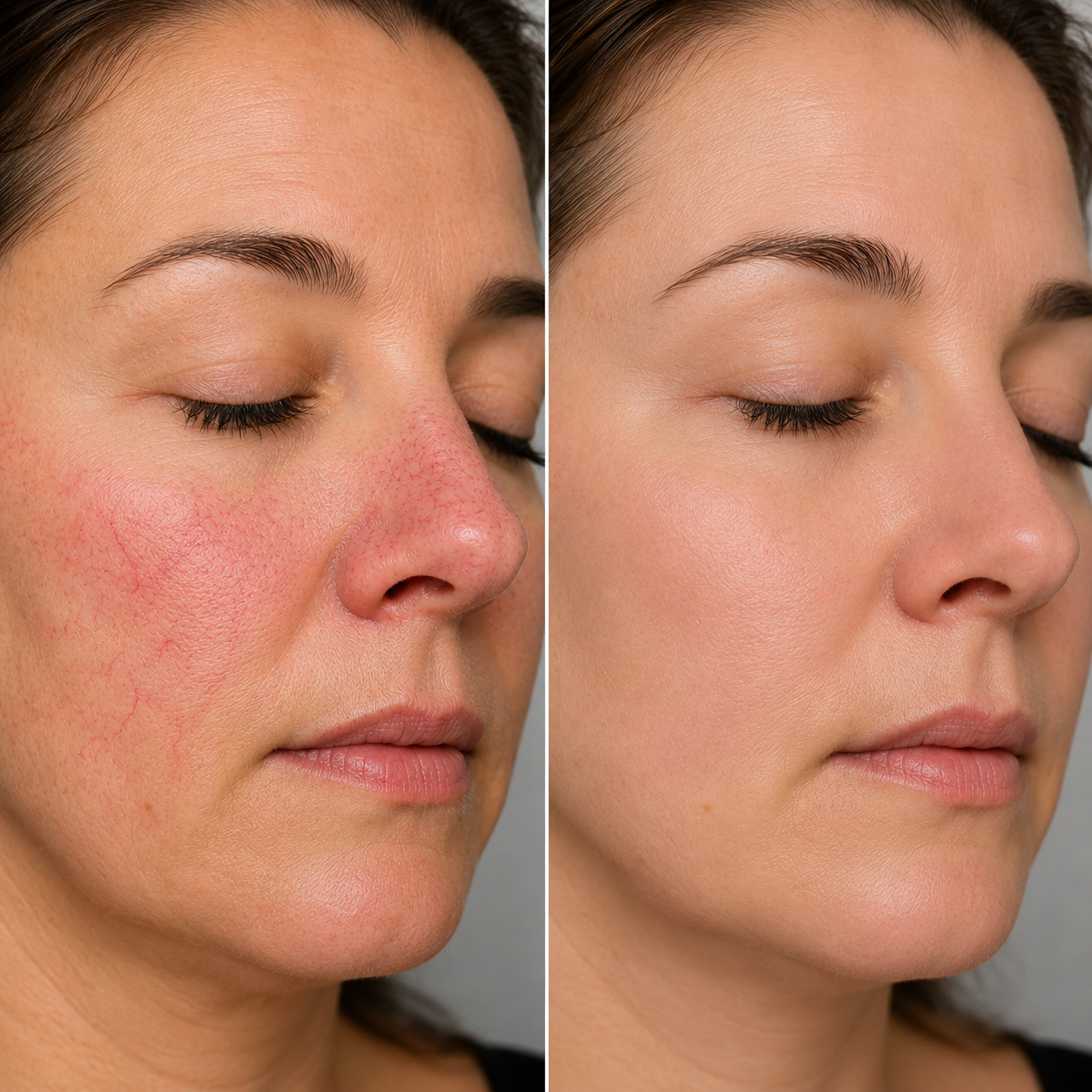
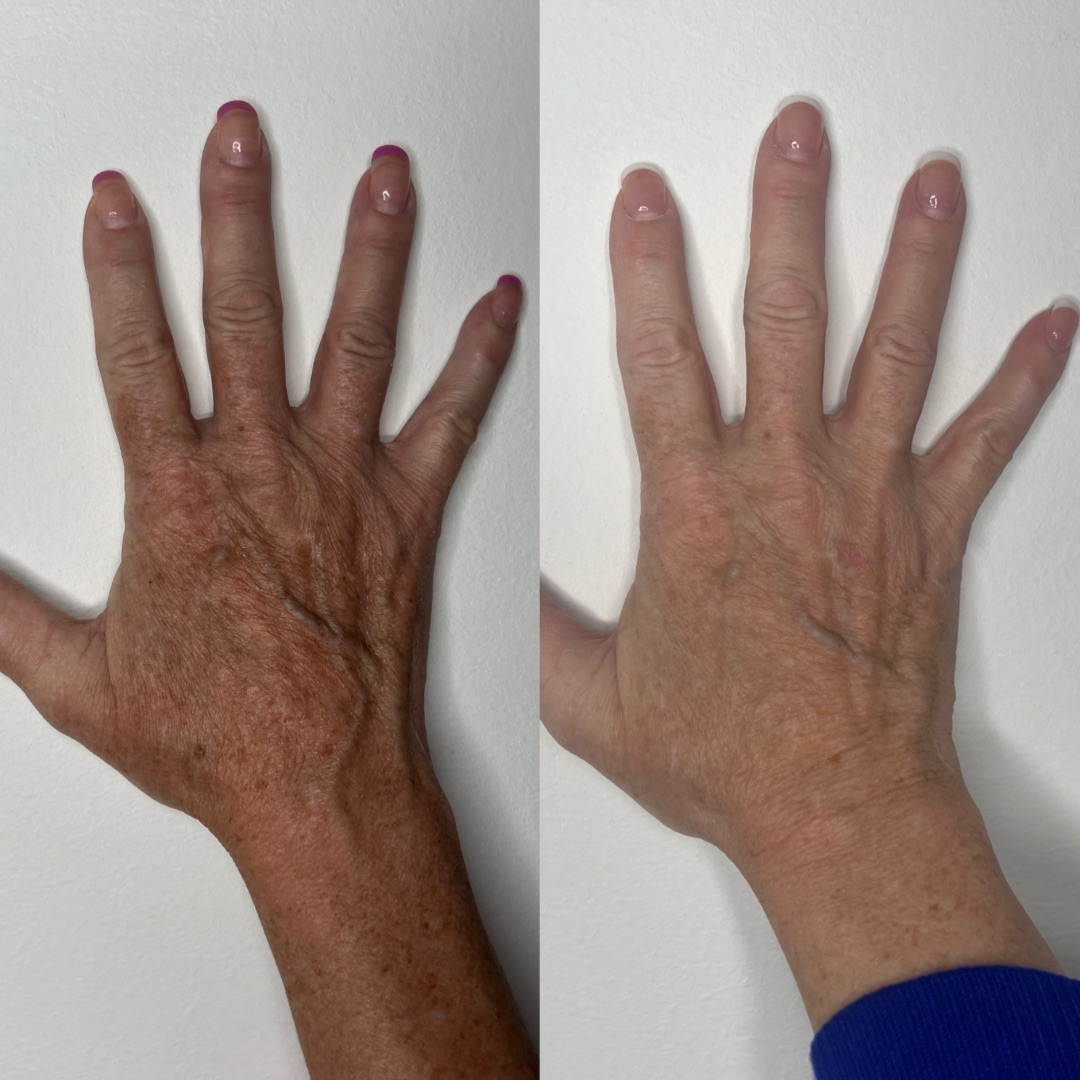
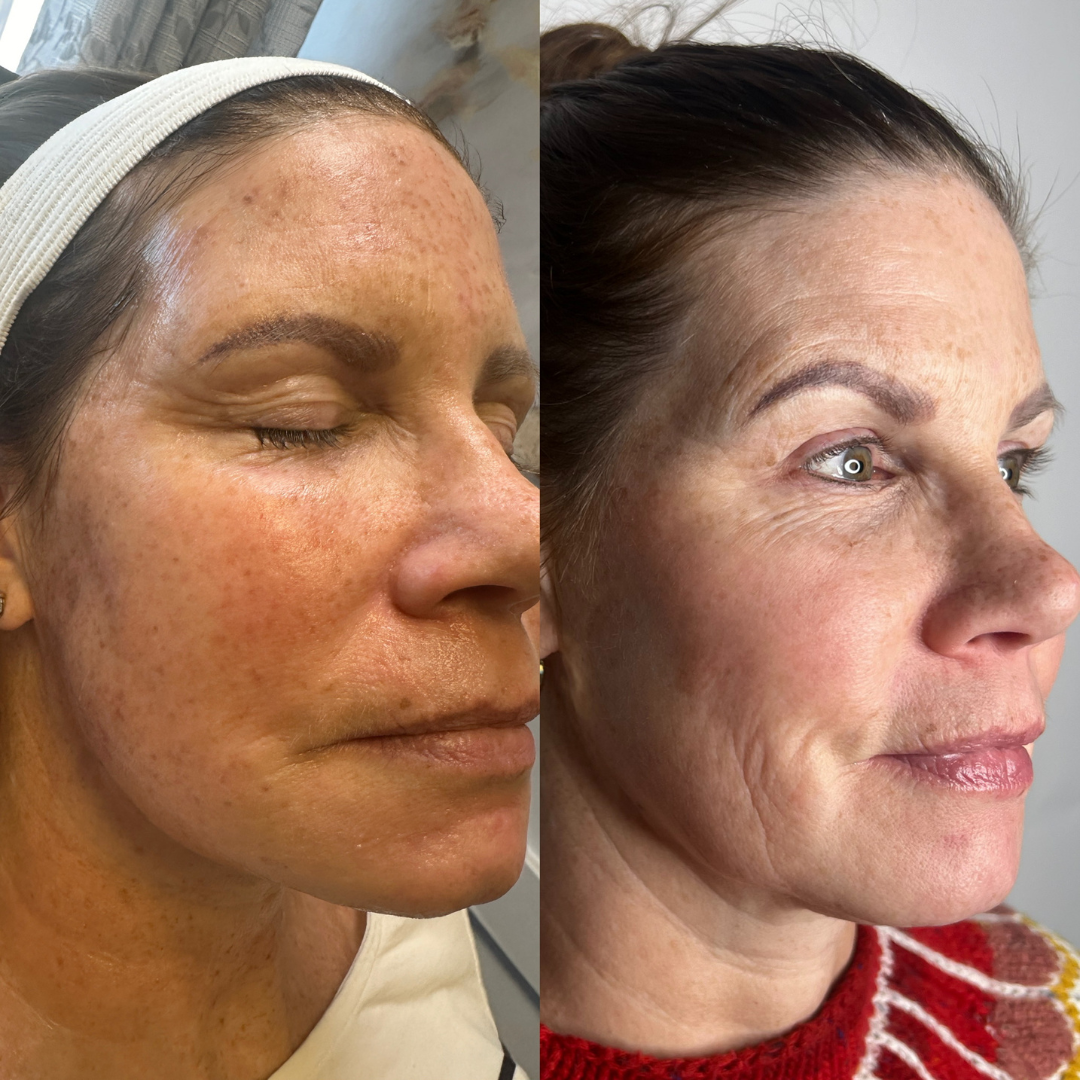
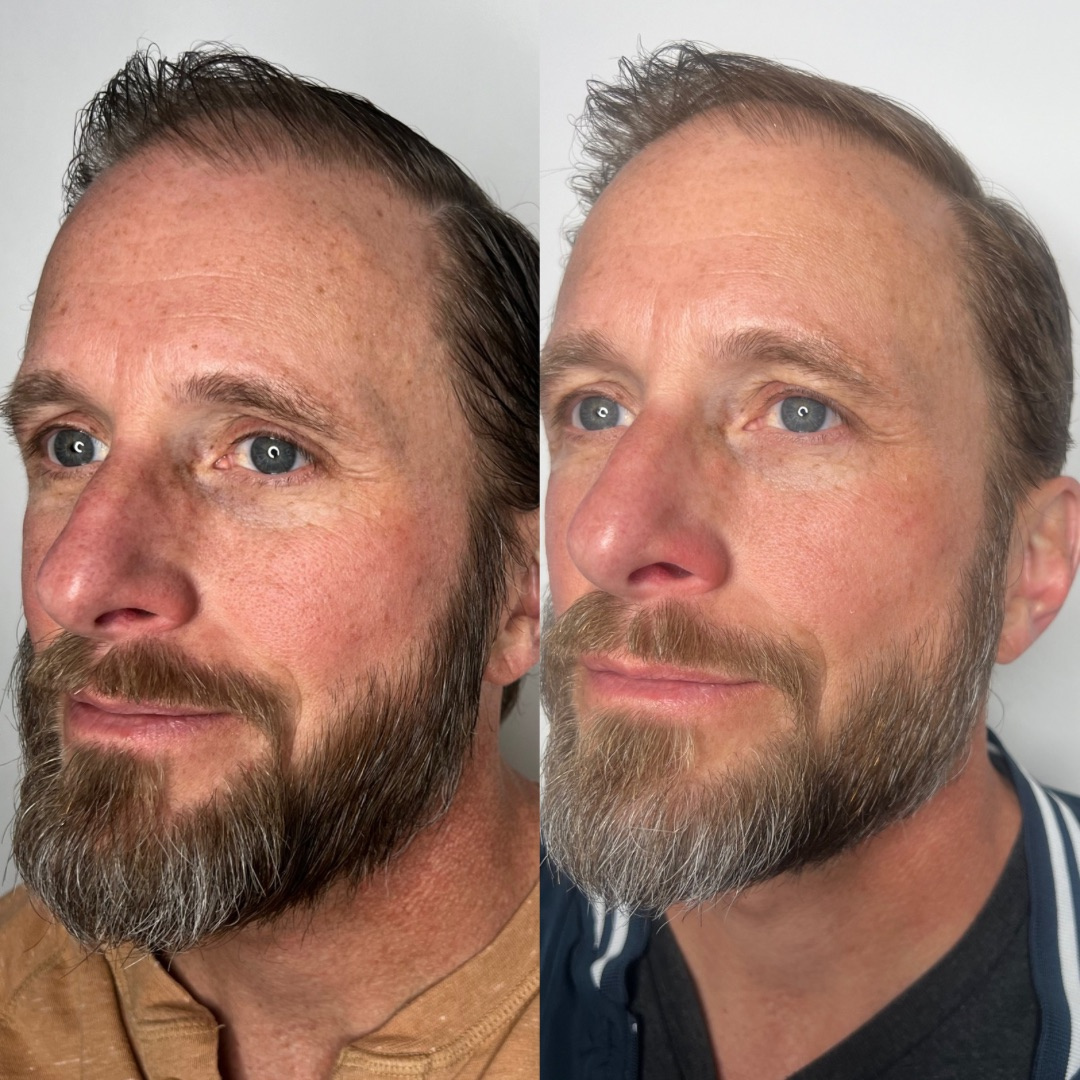
InMode's patient information states that Lumecca can improve the appearance of sun damage, age spots, freckles, vascular lesions, and rosacea-related redness, and notes that multiple sessions can improve the final result.
This is another reason starting IPL during fall or winter can be convenient.
Rather than trying to squeeze several appointments in immediately before summer, you have time to develop a treatment plan based on your skin's response.
When Should I Start IPL Before an Important Event?
Don't schedule your first IPL treatment immediately before:
A wedding
Major photography
An important work event
A reunion
A vacation
Another event where you need your skin to look predictable
After Lumecca, pigmentation can temporarily darken before fading or flaking, and temporary redness and warmth may occur. InMode notes that pigmented spots may darken over the first 24–48 hours and subsequently flake during the following week.
Give yourself adequate time.
If you have a major event coming up, tell your provider so your treatment schedule can be planned accordingly.
What Should I Expect After IPL?
After treatment, you may temporarily experience:
Redness
Warmth
Mild sensitivity
Slight swelling
Darkening of brown spots
Pigmented areas may look more noticeable before they improve.
InMode reports that sun-damage and complexion results may become visible within days, with many visible results appearing after approximately one to two weeks.
Individual responses vary.
Do I Still Need Sunscreen in the Winter?
Yes.
This is especially important in Colorado.
EPA sun-safety guidance recommends broad-spectrum sunscreen, protective clothing, shade, and monitoring the UV Index. It also specifically advises extra caution around reflective surfaces such as snow.
IPL can improve existing visible sun damage.
It cannot stop you from creating new sun damage.
IPL and the Skin + Tox Club™
If you want advanced skincare to be part of your year-round routine, ask us about the Denver Dream Med Spa Skin + Tox Club™.
Our Venti Membership includes a choice of an eligible advanced skincare treatment each month, with options that include:
IPL Photofacial
Microneedling
Advanced Laser Skin Revitalization Facial
Advanced Chemical Peel
This can be particularly useful when building a seasonal skincare strategy.
For example, your provider may determine that IPL is appropriate during a lower-sun-exposure period, while another included treatment may make more sense at a different point in the year.
Having IPL available as a monthly membership choice does not mean you should receive IPL every month. Your treatment selection and frequency should always be based on your skin, sun exposure, and provider recommendations.
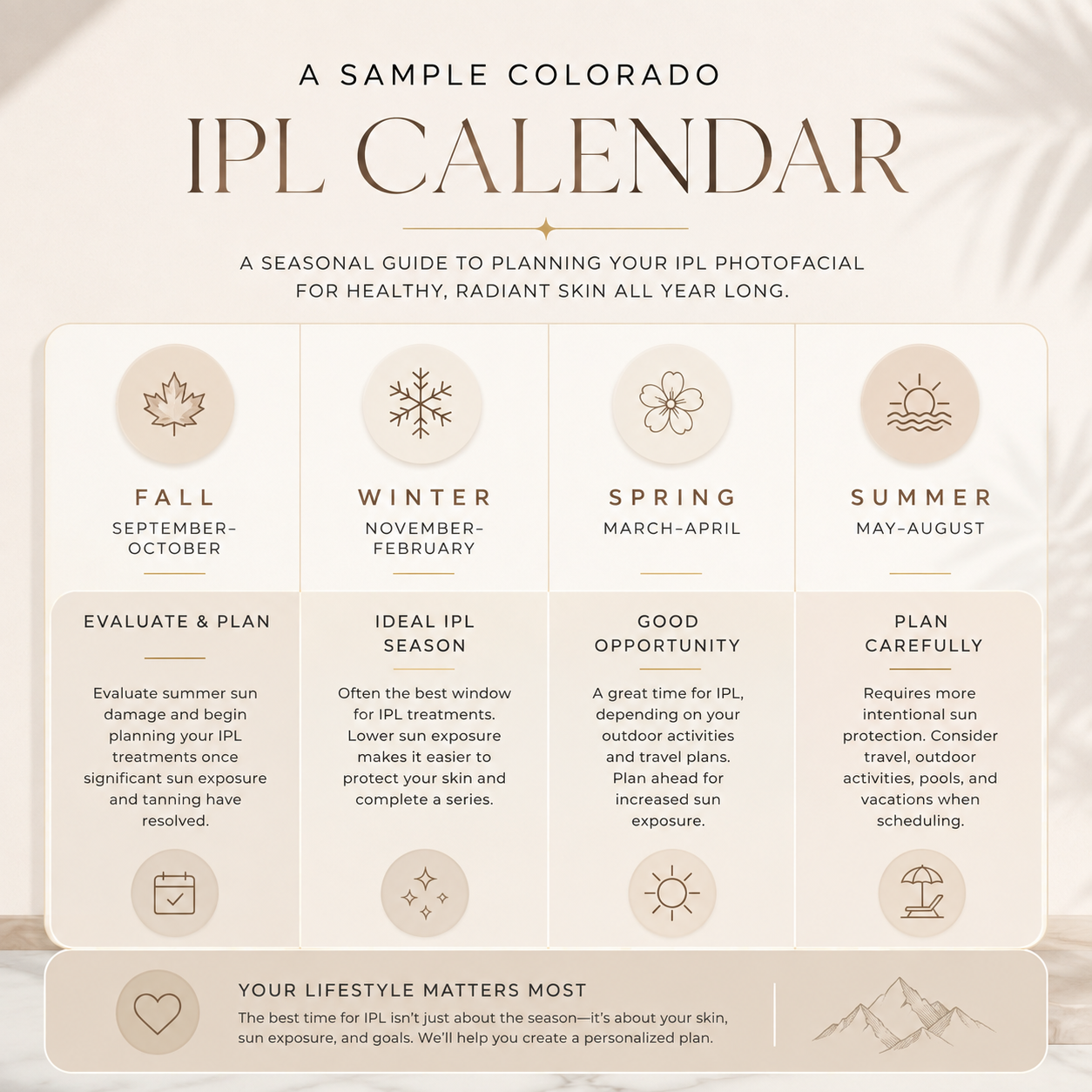
A Sample Colorado IPL Calendar
This isn't a rigid medical calendar.
Someone who works indoors and carefully avoids significant sun exposure may have a very different treatment schedule from someone who skis all winter and hikes all summer.
Your lifestyle matters as much as the month on the calendar.
Frequently Asked Questions About the Best Time for IPL
What is the best month to get IPL?
There isn't one universally best month. For many Colorado patients, fall and winter are convenient because managing significant sun exposure can be easier.
Is winter the best time for IPL?
Winter is often an excellent time, but you still need sun protection. Snow and higher elevations can increase UV exposure concerns.
Can I get IPL in December?
Potentially, yes. Your provider still needs to consider recent sun exposure, tanning, ski trips, skin type, and other factors.
Can I get IPL in the summer?
Possibly. Summer IPL requires careful consideration of recent and anticipated sun exposure.
How long should I avoid sun before Lumecca IPL?
InMode's Lumecca patient guidance recommends avoiding direct, excessive sun exposure or tanning for one month before treatment. Follow the instructions provided by your treating provider, as your individual situation may require different precautions.
Should I avoid sun after IPL?
Yes. InMode notes that patients may be more sensitive to sunlight immediately following Lumecca and recommends avoiding direct sunlight and tanning.
Can I ski after IPL?
Discuss upcoming skiing with your provider. High altitude and snow reflection can increase UV exposure, so ski trips should be considered when planning IPL.
Can I get IPL if I'm tan?
Tell your provider about any recent tanning or significant sun exposure. Don't assume your skin is ready for IPL simply because the tan looks subtle.
Is October a good time to start IPL?
For many Colorado patients, October can be an excellent time to begin considering IPL once summer sun exposure and tanning have resolved.
Is IPL good for sun spots from living in Colorado?
Lumecca IPL is designed to improve appropriate pigmented concerns including sun damage, age spots, and freckles.
Schedule Your IPL Photofacial in Denver
For many Colorado patients, fall through early spring provides the easiest window for IPL Photofacials.
But the best time for your IPL isn't determined by the calendar alone.
It's determined by your:
skin + recent sun exposure + upcoming outdoor activities + travel + treatment goals.
At Denver Dream Med Spa, we use Lumecca IPL by InMode to address appropriate concerns including brown spots, sun damage, freckles, redness, and visible vessels.
If you're trying to decide when to begin your IPL series, schedule a consultation and tell us about your upcoming travel and outdoor plans so we can help you build an appropriate treatment timeline.
Colorado gave you the sunshine. We'll help you address what it left behind.