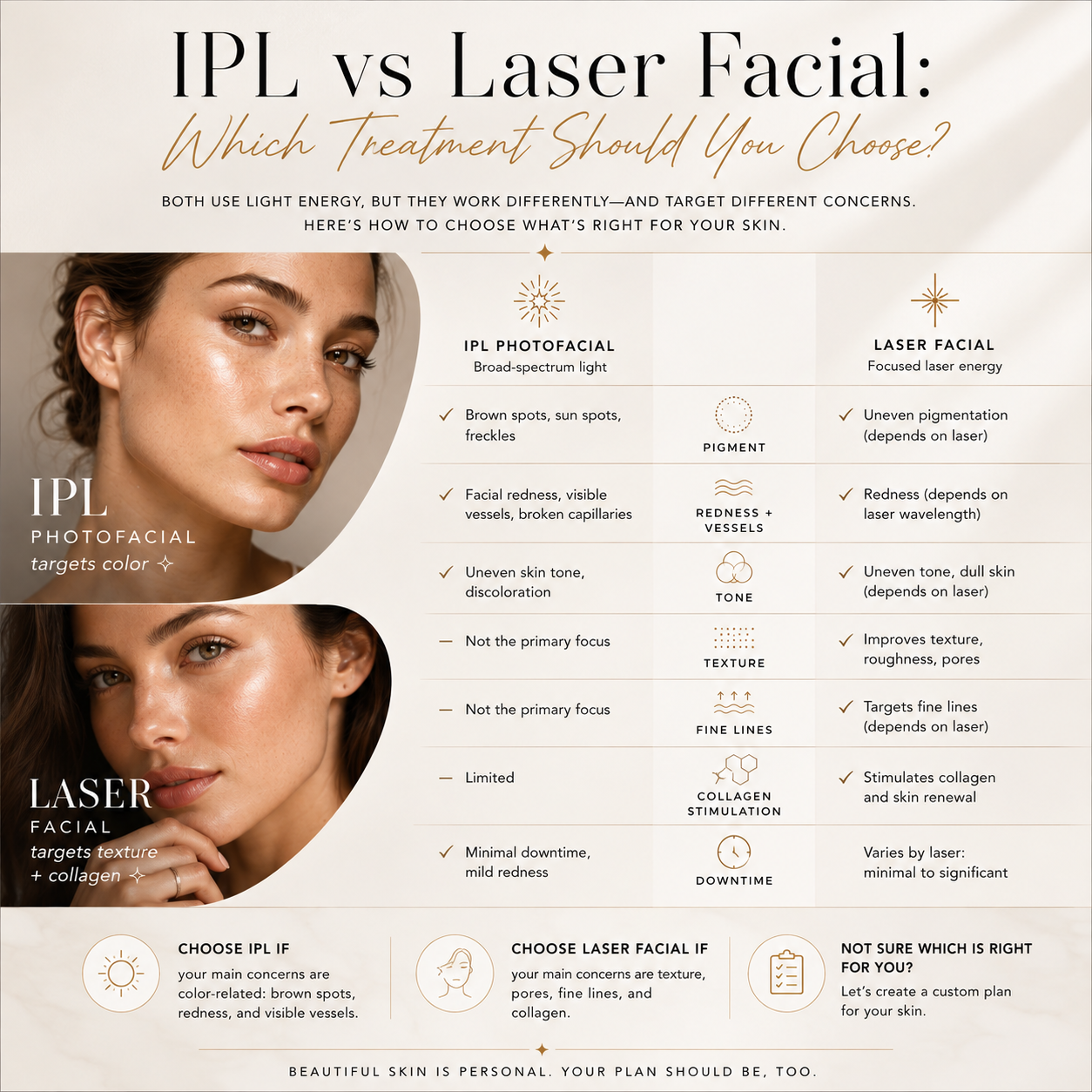
IPL vs. Laser Facial: Which Treatment Should You Choose?
If you're researching treatments for sun damage, brown spots, redness, pores, uneven skin tone, or overall skin rejuvenation, you've probably come across both IPL Photofacials and laser facials.
They can sound similar. Both use light-based technology. Both can improve the appearance of the skin. And both may be marketed as treatments for a brighter, clearer complexion.
But IPL and laser facials are not the same treatment.
The biggest difference is the type of light energy used and, more importantly, what you're trying to improve.
At Denver Dream Med Spa, we offer Lumecca IPL Photofacials as well as advanced laser skin treatments, allowing us to recommend a treatment based on your actual skin concerns instead of trying to make one device solve everything.
So, IPL vs. laser facial: which one should you choose?
The simplest way to think about it is:
IPL = primarily targets COLOR
Laser facial = often targets TEXTURE, COLLAGEN, or a specific skin concern depending on the laser
But the term "laser facial" is broad, so the exact technology matters.
What Is an IPL Photofacial?
IPL stands for Intense Pulsed Light.
Although people sometimes refer to IPL as a laser treatment, IPL is technically not a laser.
IPL uses a broad spectrum of light wavelengths rather than one specific laser wavelength.
At Denver Dream Med Spa, we use Lumecca IPL by InMode.
For appropriate candidates, Lumecca IPL may help improve the appearance of:
Brown spots
Sun spots
Freckles
Uneven pigmentation
Facial redness
Visible blood vessels
Broken capillaries
Certain rosacea-related vascular redness
Uneven-looking skin tone
One of IPL's biggest advantages is its ability to address certain brown and red discoloration concerns.
What Is a Laser Facial?
"Laser facial" is not one single treatment.
That's important.
Different laser technologies use different wavelengths, depths, and methods of delivering energy into the skin.
Depending on the technology, a laser facial may be designed to address concerns such as:
Skin texture
Enlarged-looking pores
Fine lines
Uneven pigmentation
Acne-related concerns
Collagen production
Overall skin rejuvenation
Signs of aging
Some lasers are ablative, meaning they intentionally remove or vaporize portions of the skin's surface.
Others are non-ablative, meaning they deliver energy into the skin without removing the entire surface.
Some treatments are extremely gentle. Others involve significant downtime.
That's why asking whether "IPL or laser is better" without identifying the laser is a little like asking whether a sedan or "a vehicle" is better.
The specific technology matters.




Is IPL a Laser?
No.
IPL and lasers both use light energy, but they produce that energy differently.
A laser generally produces a specific wavelength or narrow range of wavelengths.
IPL uses broad-spectrum light that can be filtered and adjusted to target appropriate chromophores within the skin.
That distinction allows IPL to be particularly useful for certain pigmentation and vascular concerns.
Which Is Better for Brown Spots: IPL or Laser?
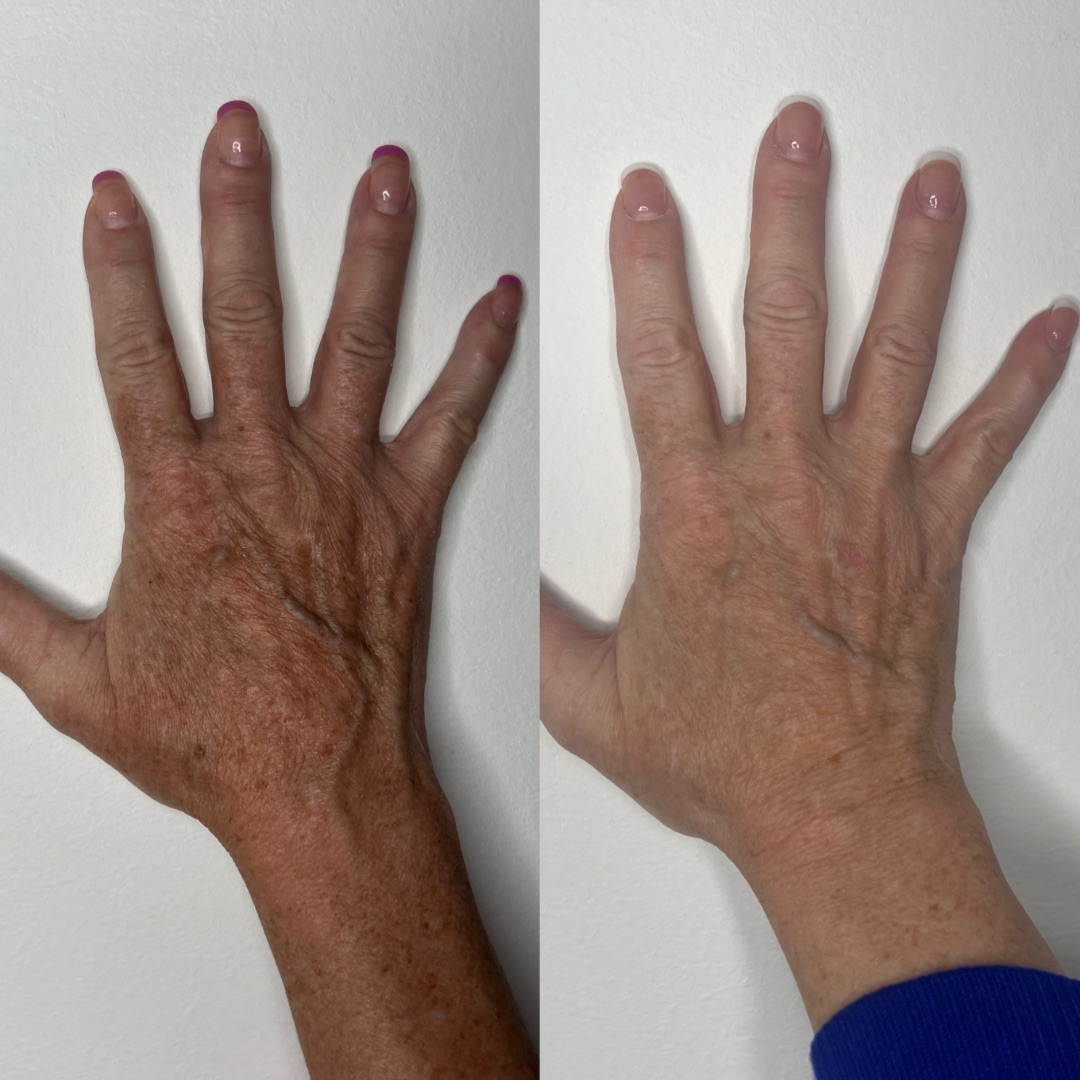
If your main concern is brown sun spots or freckles, Lumecca IPL may be an excellent option for an appropriate candidate.
During IPL treatment, light energy can be absorbed by targeted pigment.
Following treatment, some brown spots may temporarily appear darker before gradually fading or flaking.
Certain lasers can also target pigmentation.
The better treatment depends on:
Type of pigmentation
Depth of pigment
Skin tone
Treatment area
Recent sun exposure
Other skin concerns
Not every brown spot should be treated cosmetically. New, changing, irregular, or otherwise concerning pigmented lesions should be appropriately evaluated before treatment.
Which Is Better for Sun Damage?
For many people, "sun damage" actually describes several different problems.
You may have:
brown spots + freckles + redness + broken capillaries
Or:
rough texture + fine lines + uneven tone
Those two patients may benefit from completely different treatments.
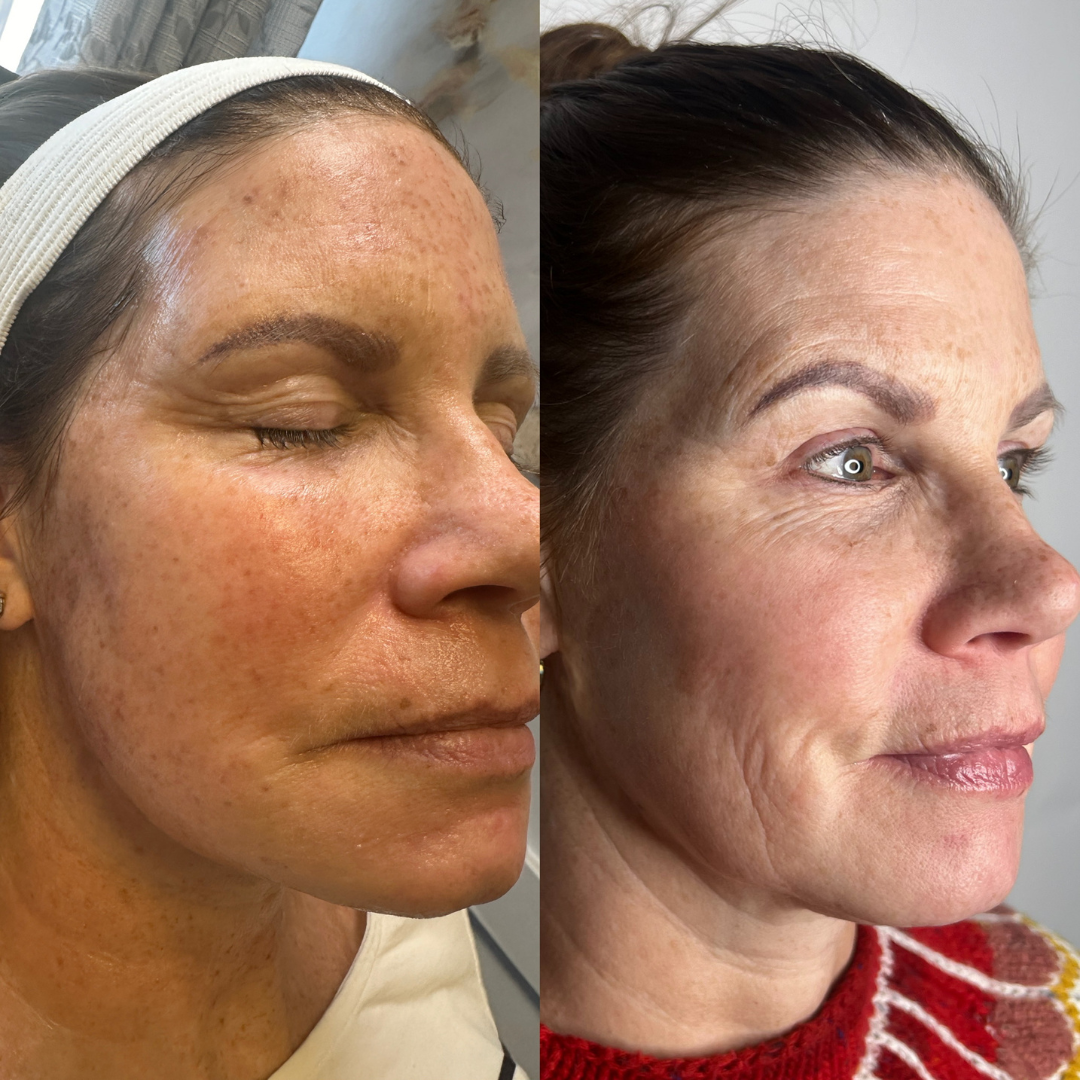
If your sun damage primarily appears as red and brown discoloration, IPL may be especially useful.
If your sun damage primarily appears as texture changes, fine lines, or other structural skin changes, an appropriate laser treatment may make more sense.
And if you have both?
A treatment plan may eventually incorporate both technologies.
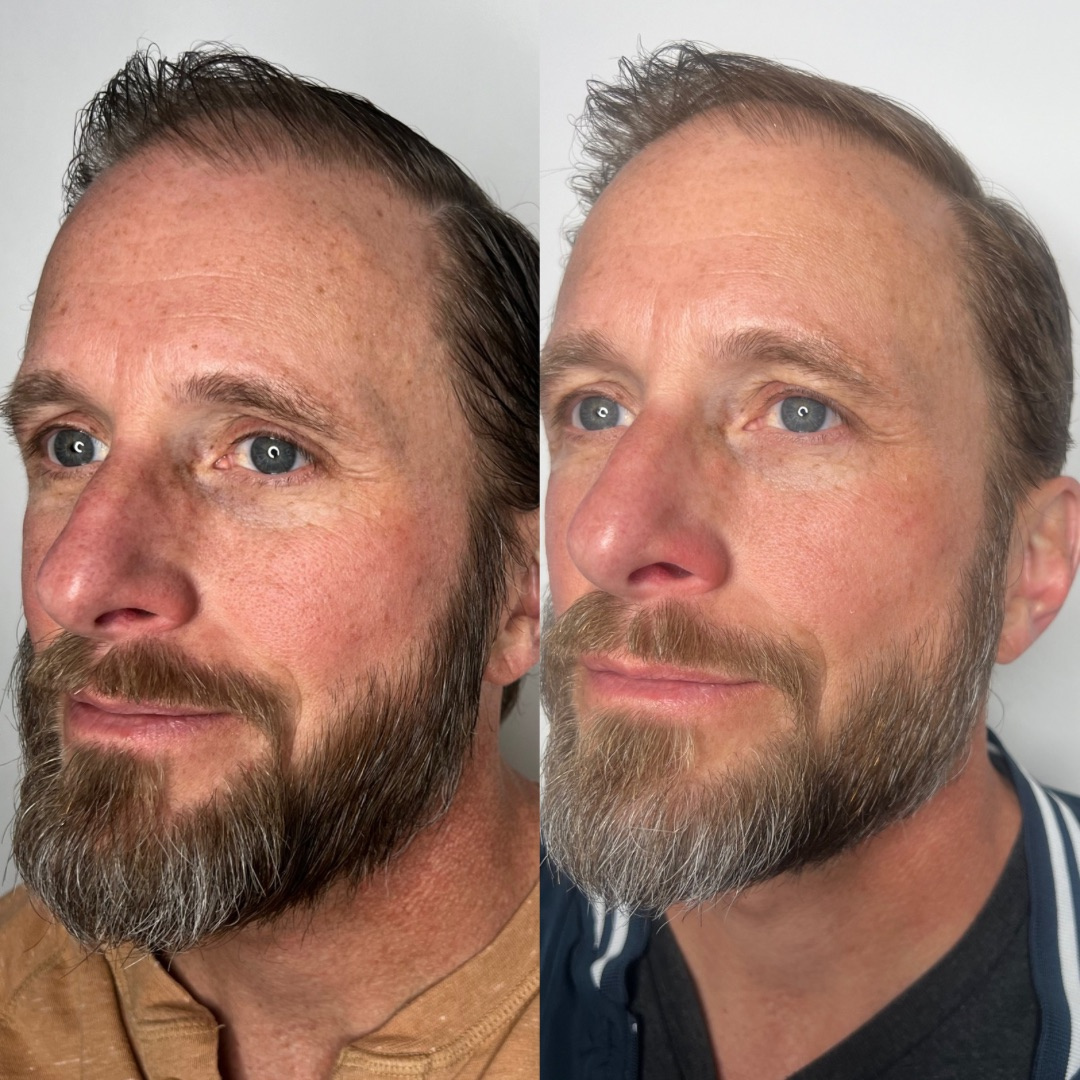
IPL for Colorado Sun Damage
Sun exposure is especially relevant when discussing aesthetic treatments in Colorado.
Our lifestyle can involve years of:
Skiing
Snowboarding
Hiking
Running
Cycling
Outdoor recreation
Driving
High-altitude sun exposure
Over time, cumulative UV exposure may contribute to visible photodamage.
That may show up as brown pigmentation, freckles, redness, visible vessels, and changes in skin quality.
IPL can be particularly appealing when those visible changes are primarily pigment- and vascular-related.
Treatment doesn't prevent future sun damage, so consistent broad-spectrum sun protection remains essential.
Which Is Better for Redness?
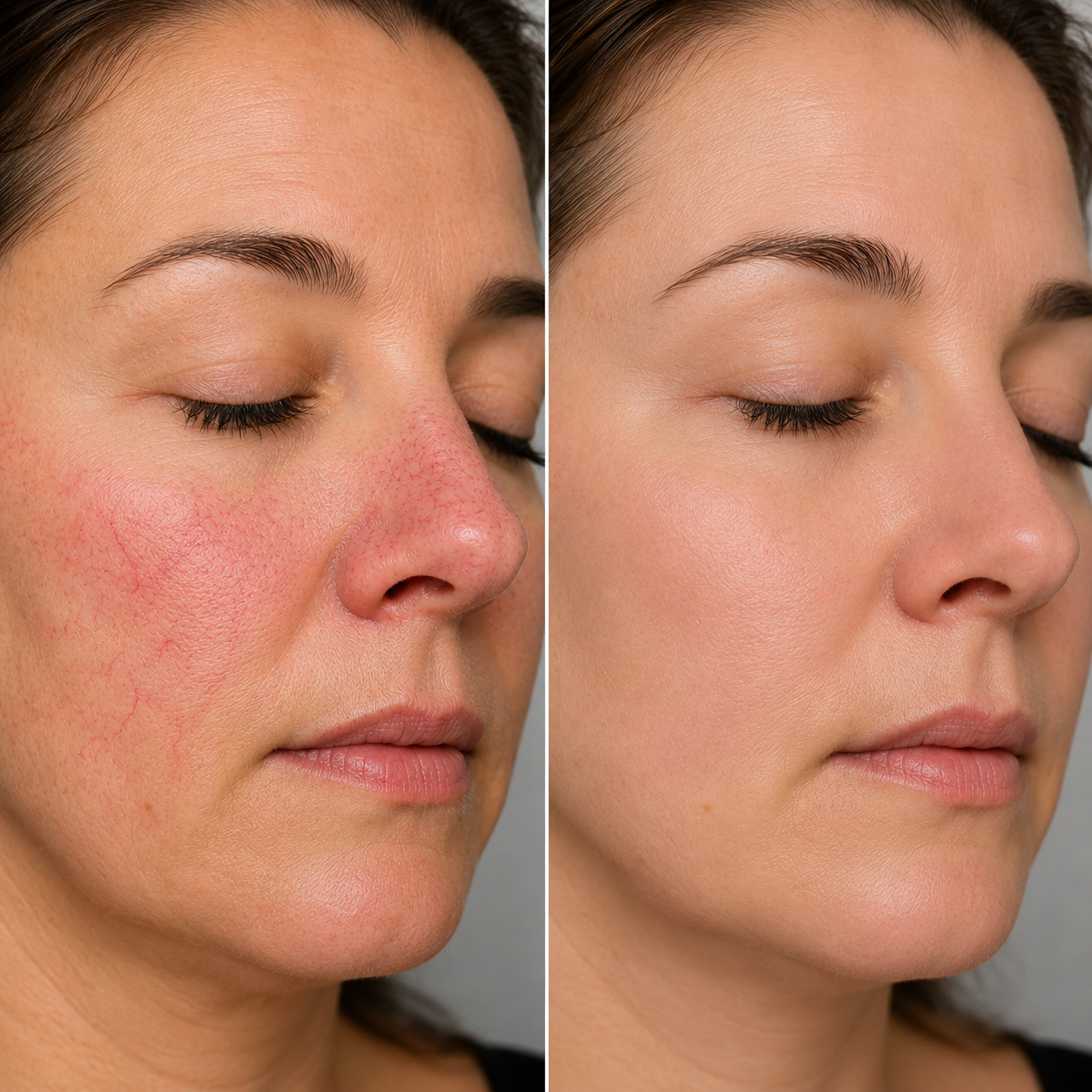
For appropriate vascular redness, IPL may be particularly useful.
Lumecca IPL can target hemoglobin within certain visible blood vessels.
Depending on your skin and candidacy, IPL may be considered for:
Persistent facial redness
Red cheeks
Redness around the nose
Broken capillaries
Visible superficial vessels
Certain rosacea-related vascular redness
Some vascular lasers can also treat redness and blood vessels very effectively.
Therefore, IPL isn't automatically superior to every laser for redness.
The specific vessel, skin type, and technology matter.
Which Is Better for Broken Capillaries?
IPL may help reduce the appearance of certain small superficial facial vessels, particularly around the nose and cheeks.
Some vascular lasers are also specifically designed to target blood vessels.
If your primary concern is a visible facial vessel, your provider should evaluate:
Vessel size
Vessel depth
Vessel color
Location
Surrounding skin
Skin type
before determining which technology is most appropriate.
Which Is Better for Rosacea?
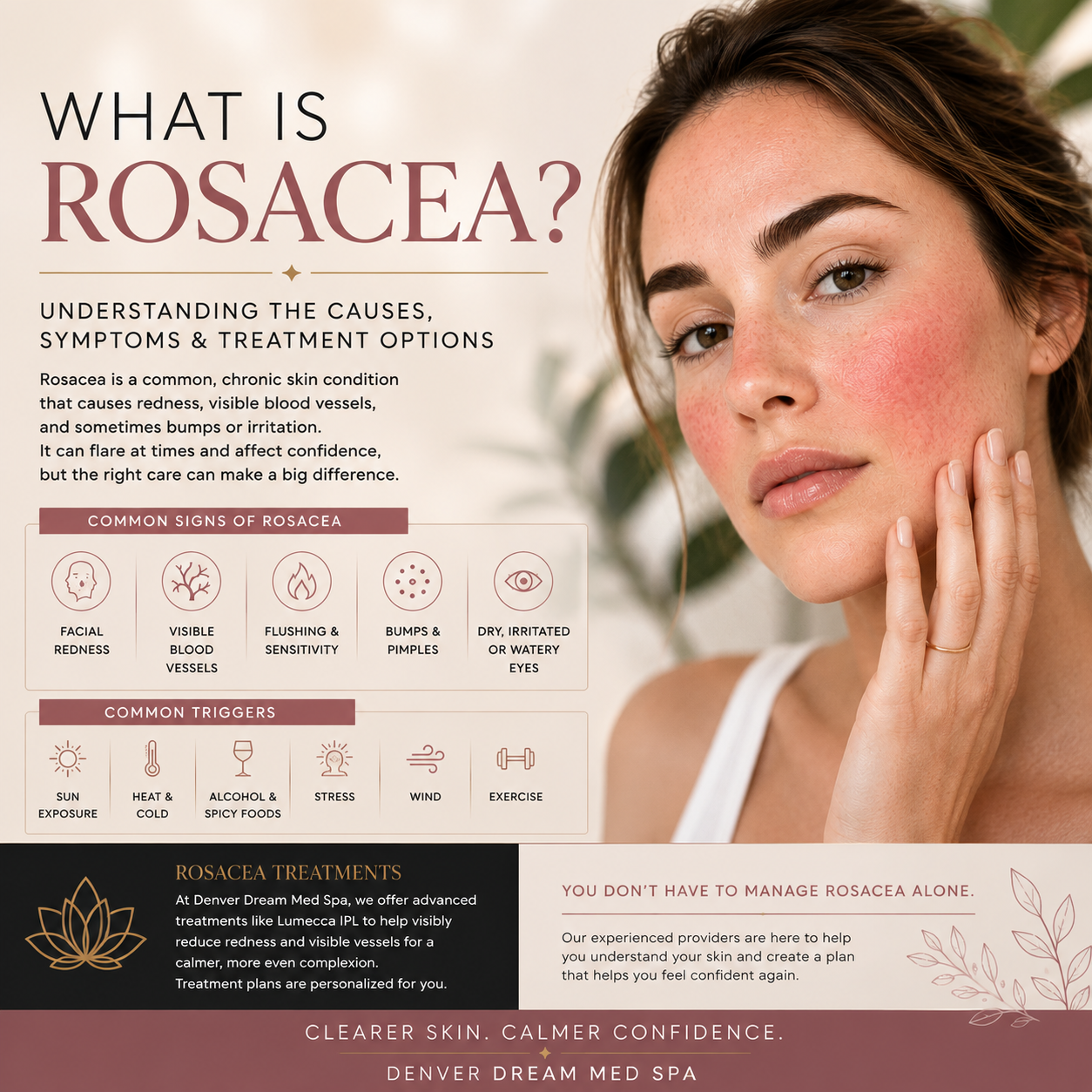
IPL may help reduce some of the visible vascular symptoms associated with rosacea, including redness and visible blood vessels, in appropriately selected patients.
However:
IPL does not cure rosacea.
Some laser technologies can also be used for vascular manifestations of rosacea.
Because rosacea can vary significantly between patients, treatment should be individualized.
Which Is Better for Pores?
If enlarged-looking pores are your primary concern, a laser facial or another collagen-focused treatment may be more relevant than IPL.
IPL isn't primarily a pore treatment.
Certain laser technologies can stimulate remodeling within the skin and improve overall texture, which may make pores appear less noticeable.
Microneedling may also be considered for this type of concern.
Which Is Better for Fine Lines?
This is another area where an appropriate laser treatment may have an advantage.
IPL can improve the overall appearance of photoaged skin by reducing visible discoloration.
That can make someone's complexion appear significantly more youthful.
But IPL isn't primarily a resurfacing treatment.
If your biggest concern is:
Fine lines
Texture
Collagen loss
Skin quality
a collagen-focused laser or another rejuvenation treatment may be more directly aligned with your goals.
Which Is Better for Skin Texture?
Generally, an appropriate laser treatment.
IPL is primarily a color-focused treatment.
It doesn't resurface the skin in the same way certain lasers do.
Depending on the technology, laser treatments may improve:
Rough texture
Fine lines
Enlarged-looking pores
Acne scars
Overall skin quality
Again, the exact laser matters.
Which Is Better for Acne Scars?
IPL is not generally the first treatment we'd think of for indented or textural acne scars.
Those concerns require approaches that focus more heavily on remodeling and collagen.
Depending on the scar and patient, options may include:
Microneedling
RF microneedling
Appropriate laser treatments
Other resurfacing procedures
IPL may sometimes be relevant for color left behind by acne, but color and scarring are two different problems.
IPL vs. Laser Facial Downtime
Downtime varies substantially.
After IPL, you may experience:
Temporary redness
Warmth
Mild swelling
Sensitivity
Temporary darkening of treated pigmentation
IPL is generally associated with relatively minimal downtime.
After a laser facial, you may experience:
Redness
Warmth
Sensitivity
Dryness
Swelling
Flaking
However, laser downtime varies enormously depending on the device and treatment intensity.
A gentle non-ablative laser facial and an aggressive resurfacing laser should not be placed in the same downtime category.
Ask exactly which laser is being recommended and what recovery to expect.
Does IPL or Laser Hurt More?
Comfort depends on the device, settings, treatment area, and individual sensitivity.
IPL is often described as a quick warm or snapping sensation.
Laser treatments can range from very mild warmth to substantially more intense sensations depending on the technology.
Numbing may be used with certain laser procedures.
Your provider should explain what to expect before beginning treatment.
How Many IPL Treatments Will I Need?
There is no universal number.
Some patients notice visible improvement following an initial Lumecca IPL treatment, while others benefit from a series.
Your treatment plan depends on factors such as:
Amount of sun damage
Degree of pigmentation
Vascular redness
Treatment area
Skin characteristics
Individual response
Desired outcome
Maintenance treatments may also be appropriate.
How Many Laser Facials Will I Need?
This depends entirely on the laser and your treatment goals.
Some gentle laser treatments are intentionally performed as a series.
Other more intensive procedures may be performed less frequently.
This is another reason generic comparisons between "IPL and laser facials" can be misleading.
Always compare the actual laser technology being recommended with IPL rather than treating all lasers as identical.
Can You Combine IPL and Laser Treatments?
Potentially.
Because the treatments may target different aspects of the skin, they can sometimes complement one another within a carefully planned treatment program.
For example:
IPL → brown spots + redness + visible vessels
and, at an appropriate interval:
Laser treatment → texture + pores + collagen + overall skin rejuvenation
That doesn't mean both treatments should automatically be performed at the same appointment.
Your provider should determine appropriate sequencing and spacing.
Should I Get IPL or a Laser Facial First?
Start with your biggest concern.
If you primarily see:
Brown spots + freckles + redness + visible vessels → ask about IPL.
If you primarily see:
Texture + pores + fine lines + collagen concerns → ask about an appropriate laser facial.
If you have:
Pigmentation + redness + texture + signs of aging
you may ultimately benefit from a treatment plan that uses more than one technology.
IPL vs. Laser Facial Cost in Denver
At Denver Dream Med Spa, IPL Photofacial treatments start at $350+.
Laser facial pricing depends on the specific treatment being performed.
When comparing costs, don't simply ask:
"Which treatment is cheaper?"
Ask:
"Which treatment is actually designed to improve my primary concern?"
Spending money on the wrong technology isn't a better value just because the appointment costs less.
IPL and Laser Facials in the Skin + Tox Club™
Clients interested in maintaining their skin throughout the year can also explore the Denver Dream Med Spa Skin + Tox Club™.
Our Venti Membership allows members to choose one eligible advanced skincare treatment each month from options including:
IPL Photofacial
Advanced Laser Skin Revitalization Facial
Microneedling
Advanced Chemical Peel
This can be particularly helpful for clients who have several different concerns.
Your provider may recommend IPL at one stage of your plan to focus on visible pigmentation and redness, while a laser facial or another treatment may be more appropriate at another stage.
Access to a monthly treatment does not mean every procedure should be performed monthly. Treatment selection and timing should always be based on your individual skin and provider recommendations.
IPL or Laser Facial: How Do I Choose?
Here's a simple starting point:
Consider IPL if your primary concerns are:
Brown sun spots
Freckles
Facial redness
Broken capillaries
Visible vessels
Red and brown discoloration
Uneven pigmentation
Consider a laser facial if your primary concerns are:
Uneven texture
Enlarged-looking pores
Fine lines
Collagen loss
Overall skin quality
Skin rejuvenation
Concerns specifically targeted by the laser being recommended
Consider a customized treatment plan if you have:
Sun spots AND texture
Redness AND enlarged pores
Pigmentation AND fine lines
Broken capillaries AND signs of aging
Multiple signs of Colorado sun damage
The goal isn't to determine which technology is universally superior.
The goal is to choose the right technology for the right concern.
Frequently Asked Questions About IPL vs. Laser Facials
Is IPL better than laser?
Neither is universally better. IPL can be particularly useful for appropriate red and brown discoloration, while lasers vary widely and may target pigmentation, vessels, texture, collagen, scars, or other concerns depending on the device.
Is IPL a laser facial?
No. IPL uses broad-spectrum light and is technically not a laser.
Is IPL better than laser for brown spots?
IPL can be an excellent option for appropriate brown sun spots and freckles. Certain lasers can also target pigmentation. The best option depends on the type and depth of pigment and your skin characteristics.
Is IPL or laser better for redness?
IPL and certain vascular lasers can both be used for appropriate redness and visible vessels. Treatment selection depends on the vascular concern and patient.
Is IPL or laser better for pores?
A collagen- or texture-focused laser is generally more relevant for enlarged-looking pores than IPL.
Which is better for sun damage?
If sun damage primarily appears as red and brown discoloration, IPL may be an excellent option. If it appears primarily as texture changes and fine lines, an appropriate laser treatment may be more suitable.
Which has more downtime?
IPL generally involves relatively minimal downtime. Laser downtime varies considerably according to the device and intensity.
Can I get IPL and a laser facial?
Potentially. They may be incorporated into the same overall treatment plan when appropriate, but timing should be determined by your provider.
Is IPL safe for every skin tone?
No treatment is appropriate for everyone. Because IPL interacts with pigment, careful patient selection is important. A professional evaluation should be performed before treatment.
Can IPL or laser treatments prevent future sun damage?
No. Treatments can improve existing visible concerns, but they cannot prevent future UV exposure from creating additional damage. Consistent sun protection remains essential.
IPL vs. Laser Facial in Denver: Which Is Right for You?
When choosing between an IPL Photofacial and a laser facial, don't start by asking which machine is "better."
Start by asking:
What am I trying to change?
If you want to address brown spots, freckles, redness, or visible vessels, Lumecca IPL may be worth considering.
If your biggest concerns are texture, pores, fine lines, or collagen, an appropriate laser facial may be a better fit.
And if your skin has a combination of discoloration and texture concerns, you may not need to choose just one.
At Denver Dream Med Spa, we offer Lumecca IPL and advanced laser skin treatments so your plan can be based on your skin rather than a one-treatment-fits-all approach.
Schedule a skin consultation in Denver to find out whether IPL, a laser facial, or a customized combination plan is right for you.
Learn More: