How Many Laser Hair Removal Sessions Do I Need? A Complete Guide to Results, Timelines, and Expectations
One of the most common questions people ask before starting laser hair removal is:
"How many laser hair removal sessions will I need?"
The honest answer is that there is no one-size-fits-all number.
Every person has different:
Hair color
Hair density
Skin type
Hormonal influences
Treatment areas
Hair growth cycles
Some clients see dramatic improvement after only a few treatments, while others require a more extensive treatment plan.
Understanding how laser hair removal works can help set realistic expectations and maximize your results.
In this guide, we'll explain why multiple treatments are necessary, what factors affect treatment timelines, and what you can expect throughout your laser hair removal journey.
Why Doesn't Laser Hair Removal Work in One Session?
Many people assume laser hair removal works like waxing or shaving.
It doesn't.
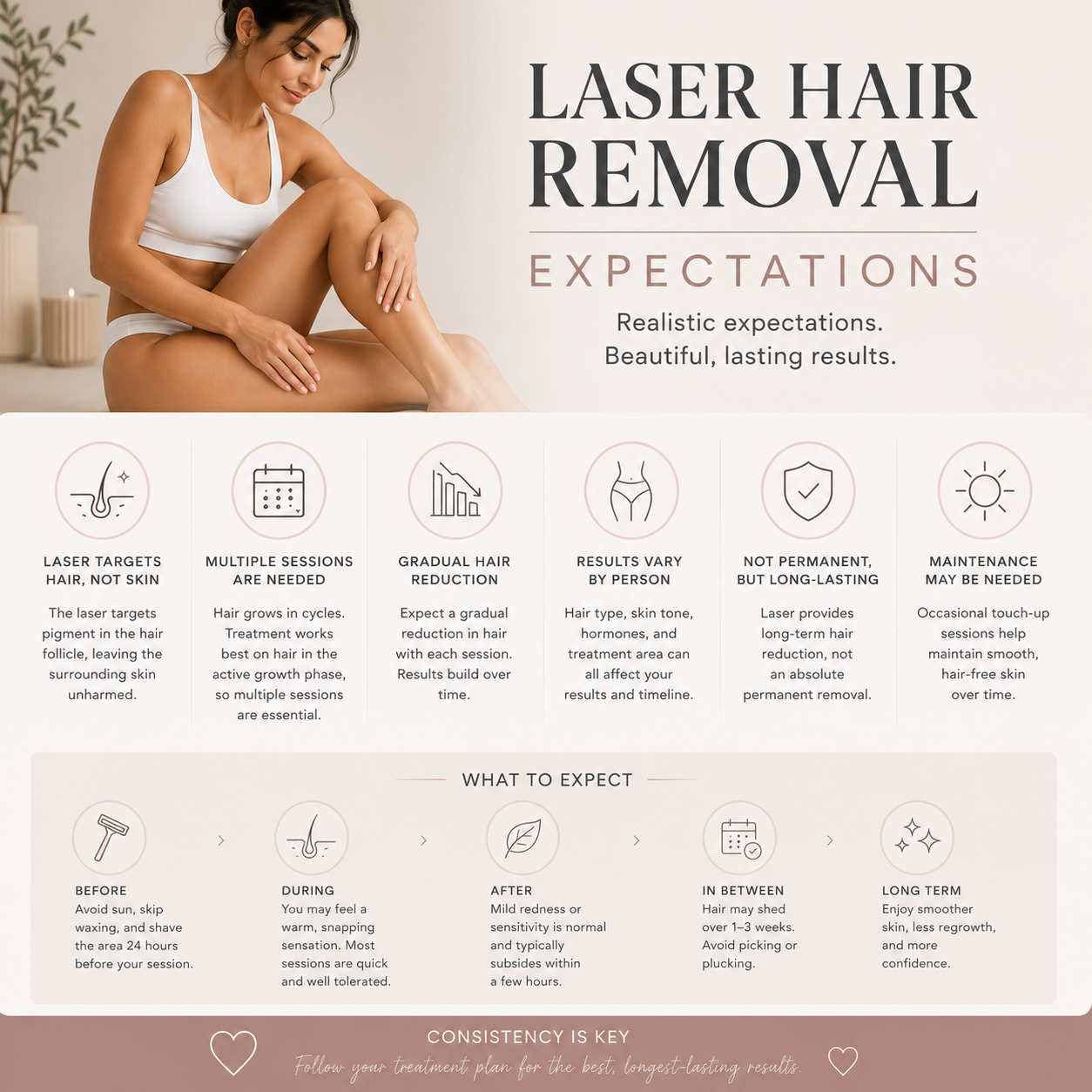
Laser hair removal targets hair follicles during a specific stage of growth known as the anagen phase, or active growth phase.
The laser uses concentrated light energy to target pigment within the follicle and reduce its ability to produce future hair growth.
The challenge is that not all hairs are growing at the same time.
At any given moment, some hairs are:
Growing actively
Transitioning
Resting
Preparing for new growth
Because laser hair removal only effectively treats follicles during the active growth stage, multiple sessions are needed to target all follicles over time.

Understanding Hair Growth Cycles
To understand why multiple treatments are necessary, it helps to understand the three main hair growth phases.
Anagen Phase (Active Growth)
This is the ideal time for laser treatment.
The follicle contains the most pigment, allowing the laser to effectively target it.
Catagen Phase (Transition)
Hair growth slows, and the follicle begins shrinking.
Laser treatment is generally less effective during this phase.
Telogen Phase (Resting)
The hair is no longer actively growing.
Eventually, it sheds and a new growth cycle begins.
Because only a percentage of your hair is in the active growth phase at any given time, treatments must be spaced out over several months.
How Many Sessions Do Most People Need?
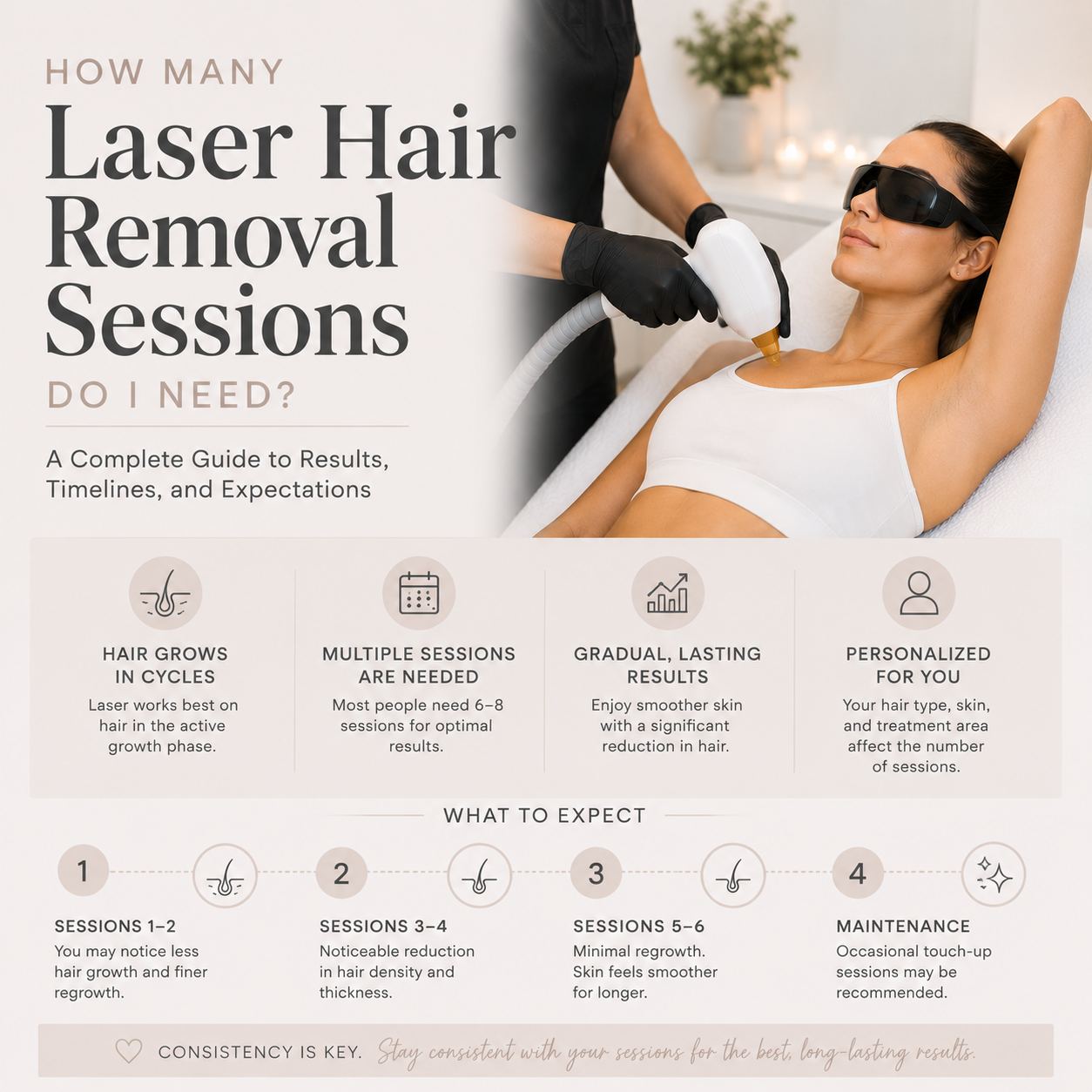
Most clients require a series of treatments to achieve optimal results.
While every person is different, many people need approximately:
6-10 Treatments
This allows enough time to target hairs as they enter active growth cycles.
Some clients may need:
Fewer treatments
Additional treatments
Periodic maintenance sessions
Your provider will create a personalized treatment plan based on your goals and treatment area.
What Affects the Number of Treatments Needed?
Several factors influence how many sessions you may require.
Hair Color
Laser hair removal works by targeting pigment.
Dark hair generally responds best because it contains more pigment for the laser to target.
Clients with:
Dark brown hair
Black hair
often respond more quickly than clients with lighter hair colors.
Hair Thickness
Coarse hair often responds very well to laser treatment.
Thicker follicles tend to absorb laser energy effectively.
Fine hair can sometimes require additional treatments.
Skin Type
Modern laser systems can safely treat a wide range of skin tones.
However, treatment settings may vary depending on:
Skin tone
Hair characteristics
Treatment area
Customized settings help maximize both safety and results.
Hormones
Hormones play a major role in hair growth.
Clients with conditions such as:
PCOS
Hormonal imbalances
Menopause-related changes
may require more treatments and occasional maintenance sessions.
Hormonal stimulation can activate new follicles over time.
Treatment Area
Different parts of the body respond differently.
Some areas tend to respond faster than others.
Popular treatment areas include:
Underarms
Bikini
Brazilian
Legs
Face
Back
Chest
Neck
Your provider will discuss expected timelines for your specific treatment areas.
Consistency
One of the biggest factors influencing results is consistency.
Skipping appointments or extending treatment intervals too long can slow progress.
Following your recommended schedule helps ensure follicles are treated during the appropriate growth phases.
Treatment Timeline: What to Expect
Many clients wonder what results will look like after each session.
Here's a general timeline.
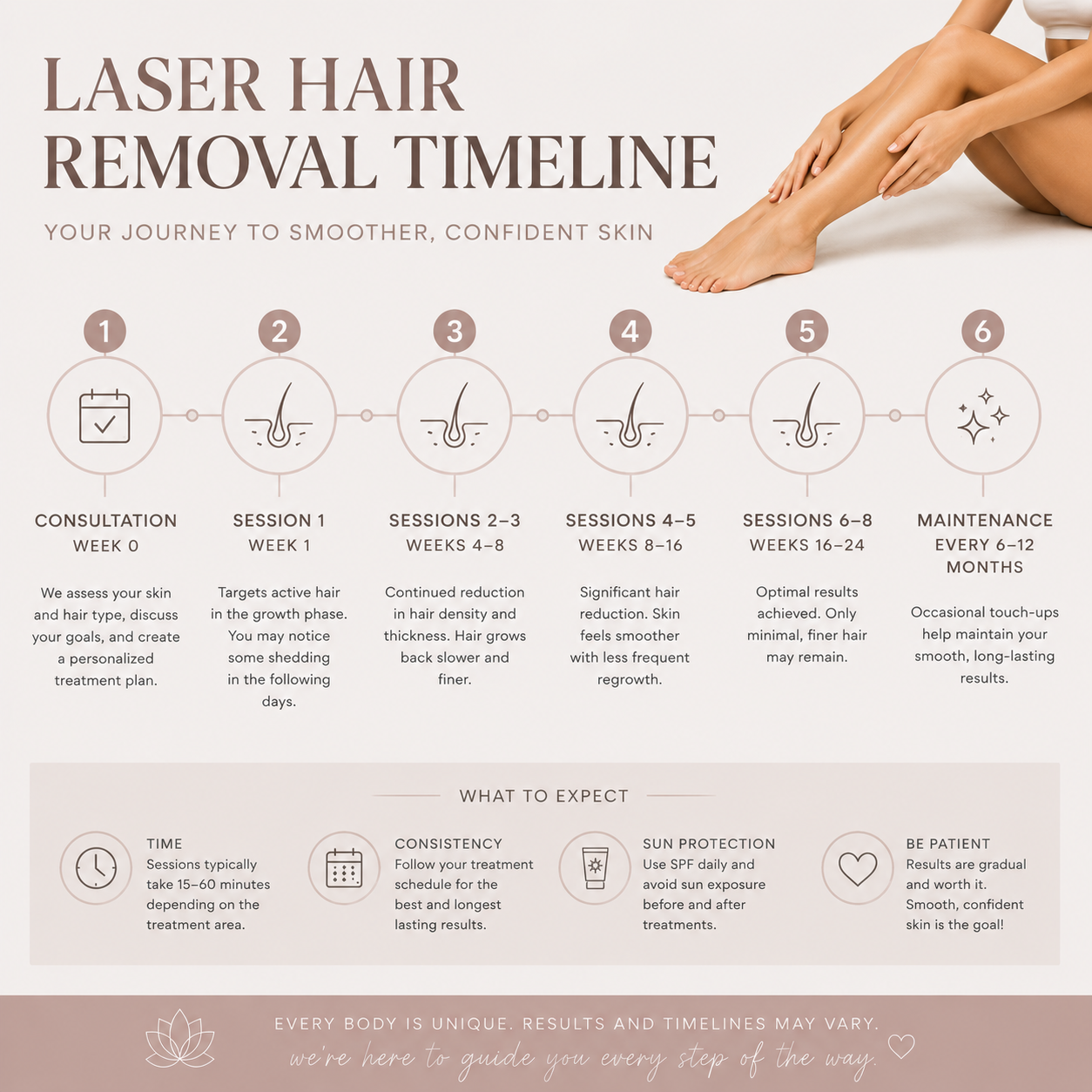
After 1 Session
Most clients notice:
Hair shedding
Slower regrowth
Softer hair texture
At this stage, significant reduction is not yet expected.
After 2-3 Sessions
Many clients begin noticing:
Less dense hair
Patchy regrowth
Reduced shaving frequency
Hair often becomes finer and lighter.
After 4-6 Sessions
This is when many clients begin seeing substantial improvement.
Common benefits include:
Noticeably reduced hair growth
Less irritation
Fewer ingrown hairs
Smoother skin
After 6-10 Sessions
Many clients achieve significant long-term reduction.
At this stage, maintenance becomes the primary focus.
Results vary depending on:
Hair type
Hormones
Treatment area
Genetics
How Often Should Laser Hair Removal Treatments Be Scheduled?
Most laser hair removal treatments are spaced several weeks apart.
Treatment intervals vary based on:
Treatment area
Hair growth patterns
Individual response
Common intervals may range from:
4 weeks
6 weeks
8 weeks
Your provider will recommend the schedule that best aligns with your treatment goals.
Do Certain Areas Require More Sessions?
Yes.
Some areas tend to be more resistant than others.
Facial Hair
Facial hair often requires additional treatments because hormones strongly influence growth patterns.
This is especially true for:
Chin
Upper lip
Jawline
Neck
PCOS-Related Hair Growth
Women with PCOS frequently need more treatments than clients without hormonal hair growth.
Maintenance treatments are often recommended.
Men's Back and Chest Hair
Men typically have denser hair growth and higher testosterone levels.
Because of this, larger areas such as:
Back
Chest
Shoulders
may require additional treatments.
Will I Ever Need Maintenance Treatments?
Possibly.
Laser hair removal provides long-term hair reduction, but hormones, aging, and genetics can influence future hair growth.
Some clients choose occasional maintenance treatments to maintain their results.
Maintenance is especially common for:
Facial hair
PCOS-related hair growth
Hormonal hair growth
Men's back and chest treatments
Even when maintenance is needed, most clients still experience dramatically less hair than before treatment.
How Do I Know If My Treatments Are Working?
Signs of successful treatment often include:
Slower regrowth
Hair shedding
Patchy growth
Softer hair texture
Less shaving
Reduced density
Fewer ingrown hairs
Results develop gradually over time.
Laser hair removal is a process, not an overnight transformation.
Can I Speed Up My Results?
The best way to maximize results is to:
Attend appointments consistently
Follow pre-care instructions
Follow post-care instructions
Avoid waxing and plucking
Communicate with your provider about changes in medications or hormones
Consistency is usually the biggest factor in achieving successful outcomes.
Why Some People Need More Treatments Than Others
Two clients can receive identical treatments and experience different timelines.
Factors that influence response include:
Genetics
Hormones
Hair density
Hair color
Skin type
Age
Medical history
This is completely normal.
A personalized treatment plan helps ensure realistic expectations and optimal results.
Is It Worth Completing the Full Series?
Absolutely.
Many clients become discouraged after only a few treatments because they still see some hair growth.
Remember:
Laser hair removal works gradually.
Stopping treatment too early often prevents clients from experiencing the full benefits.
Completing the recommended series allows providers to target follicles through multiple growth cycles and maximize long-term reduction.
Why Denver Dream Medspa Recommends Customized Treatment Plans
At Denver Dream Medspa, we understand that every client is unique.
There is no universal number of treatments that works for everyone.
Our providers create individualized plans based on:
Treatment area
Hair characteristics
Skin type
Hormonal influences
Long-term goals
Whether you're seeking facial hair reduction, Brazilian laser hair removal, full-body laser hair removal, or treatment for PCOS-related hair growth, we'll help create a plan designed around your needs.
Frequently Asked Questions
How many laser hair removal sessions do most people need?
Most clients require approximately 6-10 treatments, although individual needs vary.
Can I see results after one session?
Yes. Many clients notice shedding and slower regrowth after their first treatment.
Why does my hair still grow after laser hair removal?
Hair grows in cycles. Multiple treatments are needed to target follicles during active growth phases.
Do people with PCOS need more treatments?
Often, yes. Hormonal hair growth may require additional treatments and maintenance.
Can men need more sessions than women?
Yes. Men frequently have denser hair growth and may require additional treatments, particularly on the chest, back, and shoulders.
Will I need maintenance treatments forever?
Not necessarily. Some clients choose occasional maintenance sessions, while others experience long-term reduction with minimal upkeep.
Is it normal to still have hair after several treatments?
Yes. Hair reduction occurs gradually. Most clients see continued improvement throughout their treatment series.
Schedule Your Laser Hair Removal Consultation
If you're wondering how many laser hair removal sessions you'll need, the best place to start is with a personalized consultation.
At Denver Dream Medspa, we'll evaluate your skin, hair, treatment goals, and medical history to create a customized treatment plan designed specifically for you.
Schedule your consultation today and take the first step toward smoother, lower-maintenance skin.
Learn More: