
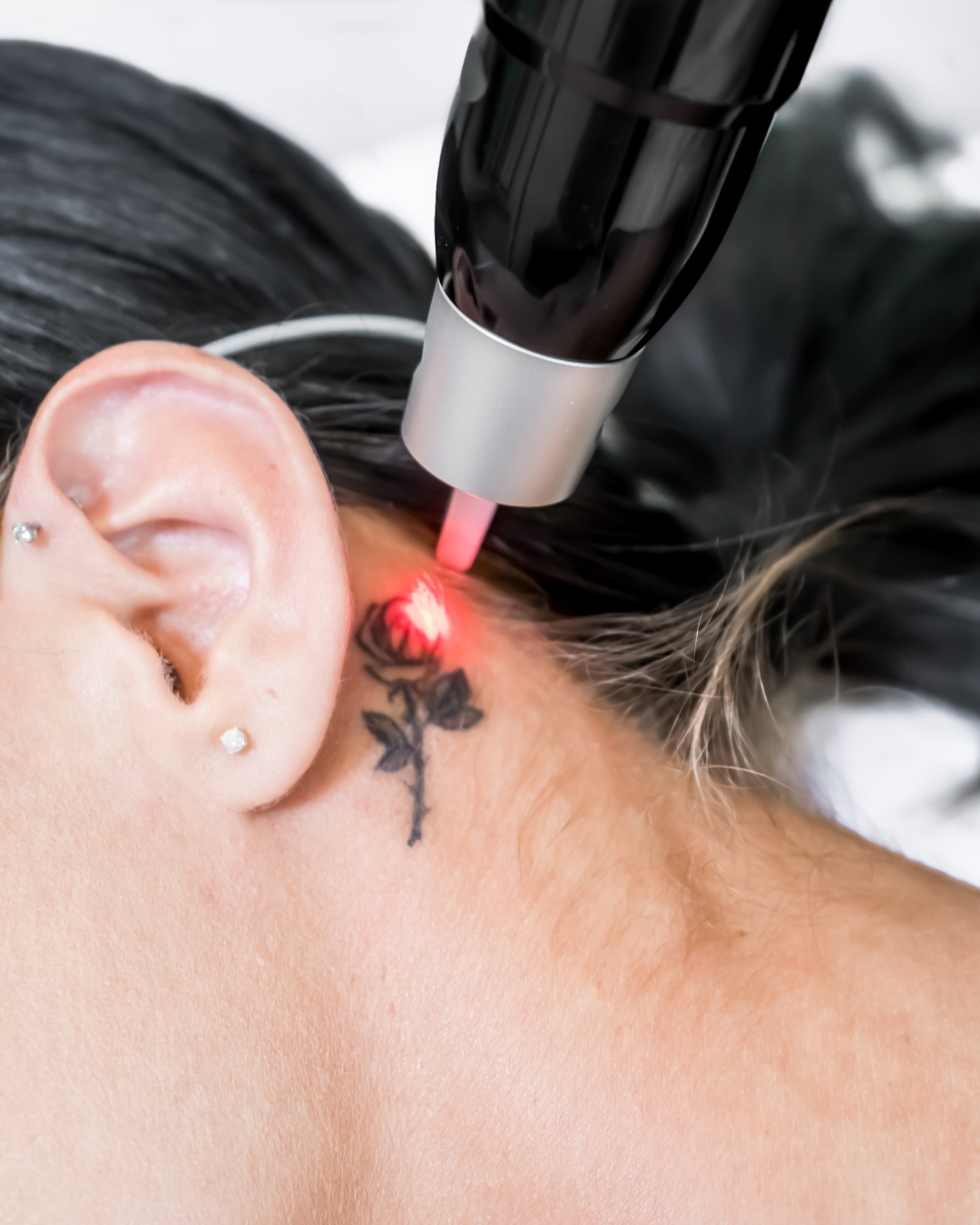
Best Tattoo Removal Technology: Pico vs Q-Switched
Pico vs Q-Switched Lasers: Understanding the Real Differences
Not all laser tattoo removal technologies are the same — and the type of laser used plays a major role in safety, effectiveness, comfort, and total number of sessions required.
Two technologies are most commonly discussed: Q-Switched lasers and Pico (picosecond) lasers. While both can remove tattoo ink, they function very differently and produce different outcomes depending on the tattoo and skin type.
At Denver Dream Med Spa, technology selection is based on science, skin safety, and tattoo characteristics, not marketing claims. This guide explains how Pico and Q-Switched lasers work, how they differ, and why the best technology is often the one chosen by an experienced provider — not the newest name.
What Laser Technology Does in Tattoo Removal
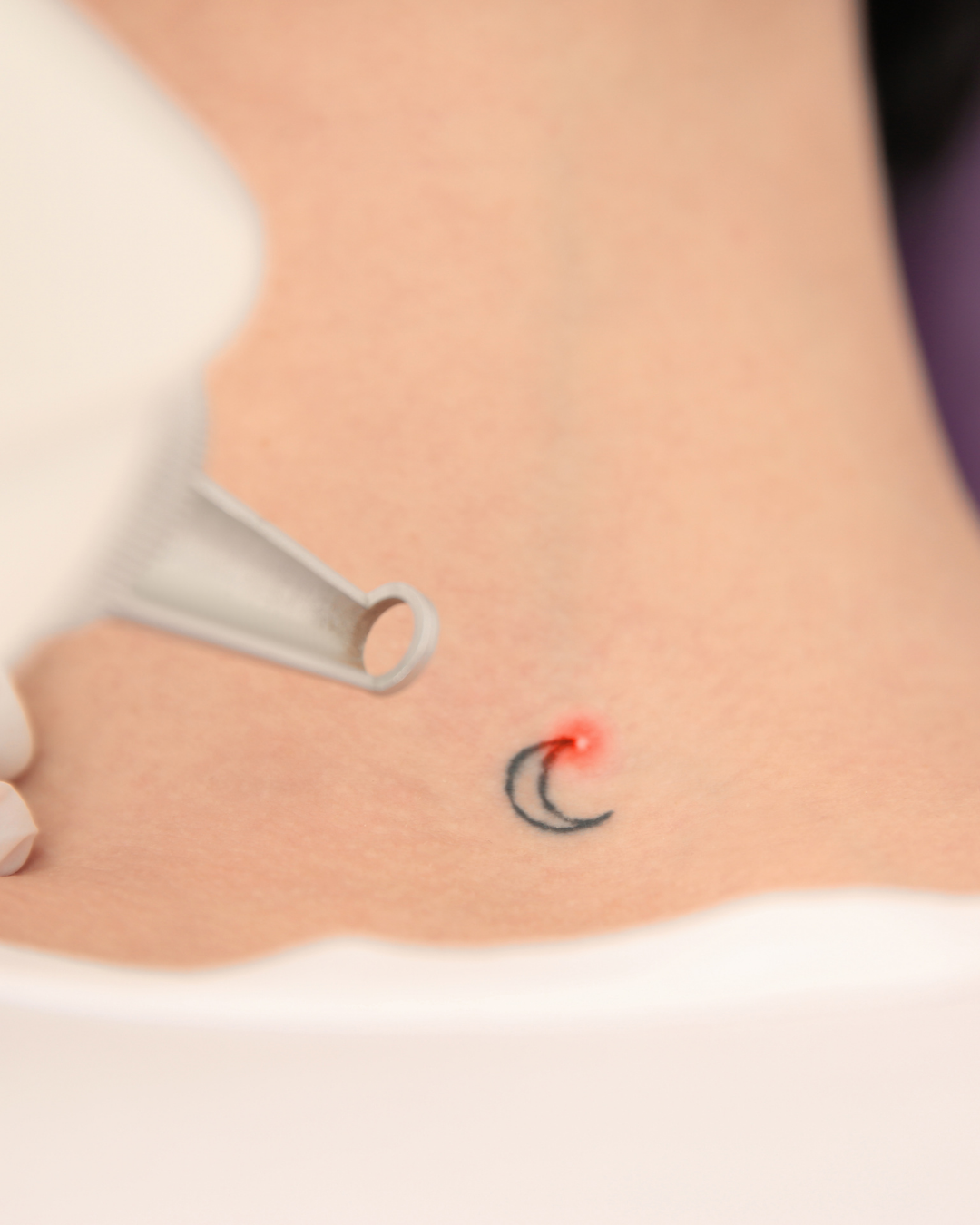
Laser tattoo removal works by delivering ultra-short pulses of energy that shatter tattoo ink particles into fragments small enough for the body to clear.
The effectiveness of this process depends on:
Pulse duration (how fast the energy is delivered)
Wavelength (which ink colors are targeted)
Heat dispersion
Precision and control
This is where Pico and Q-Switched lasers differ most.

Q-Switched Laser Technology Explained
Q-Switched lasers have been used in tattoo removal for decades. They deliver energy in nanosecond pulses, which is fast enough to break up ink — but with greater heat transfer to surrounding tissue.
Key Characteristics of Q-Switched Lasers:
Nanosecond pulse duration
Effective on black and dark inks
Requires more sessions for dense or multicolor tattoos
Higher thermal effect on skin
May be less ideal for darker skin tones
Q-Switched lasers remain effective tools when used correctly, especially for certain ink types and older tattoos.
Pico Laser Technology Explained
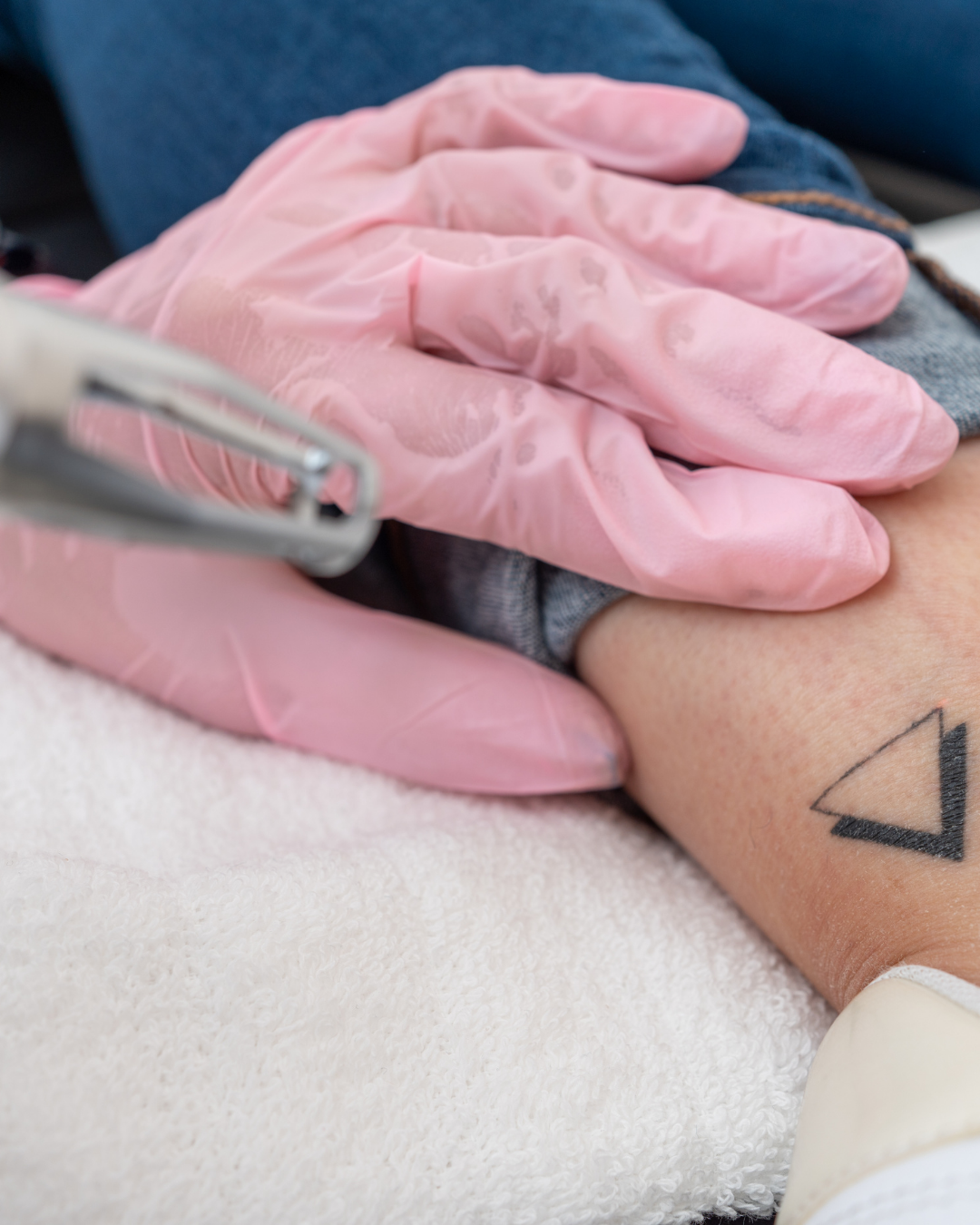
Pico lasers deliver energy in picoseconds — significantly faster than nanoseconds — creating a more mechanical ink-shattering effect with less heat.
Key Characteristics of Pico Lasers:
Picosecond pulse duration (thousands of times shorter)
More efficient ink fragmentation
Improved clearance of stubborn colors
Reduced thermal damage to surrounding skin
Often fewer sessions required
Pico technology represents a major advancement in tattoo removal when used appropriately.
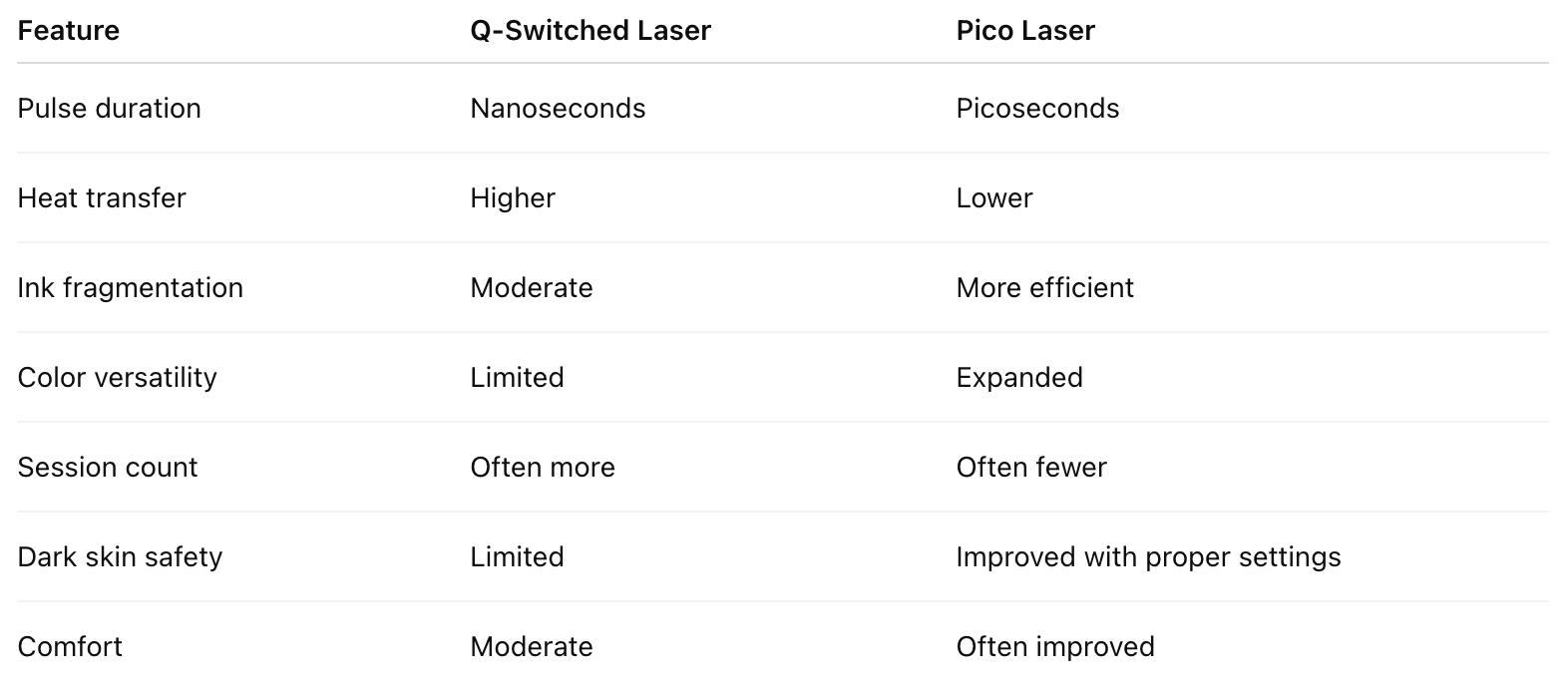
Pico vs Q-Switched: Safety & Performance Comparison
Is Pico Always Better Than Q-Switched?
Not necessarily.
While Pico lasers offer clear advantages, the best results come from proper technology selection, not assuming one laser fits every tattoo.
Q-Switched lasers may still be appropriate for:
Certain black or dark tattoos
Older tattoos with lighter ink density
Specific treatment goals
In some cases, combining technologies produces the safest and most effective outcome.
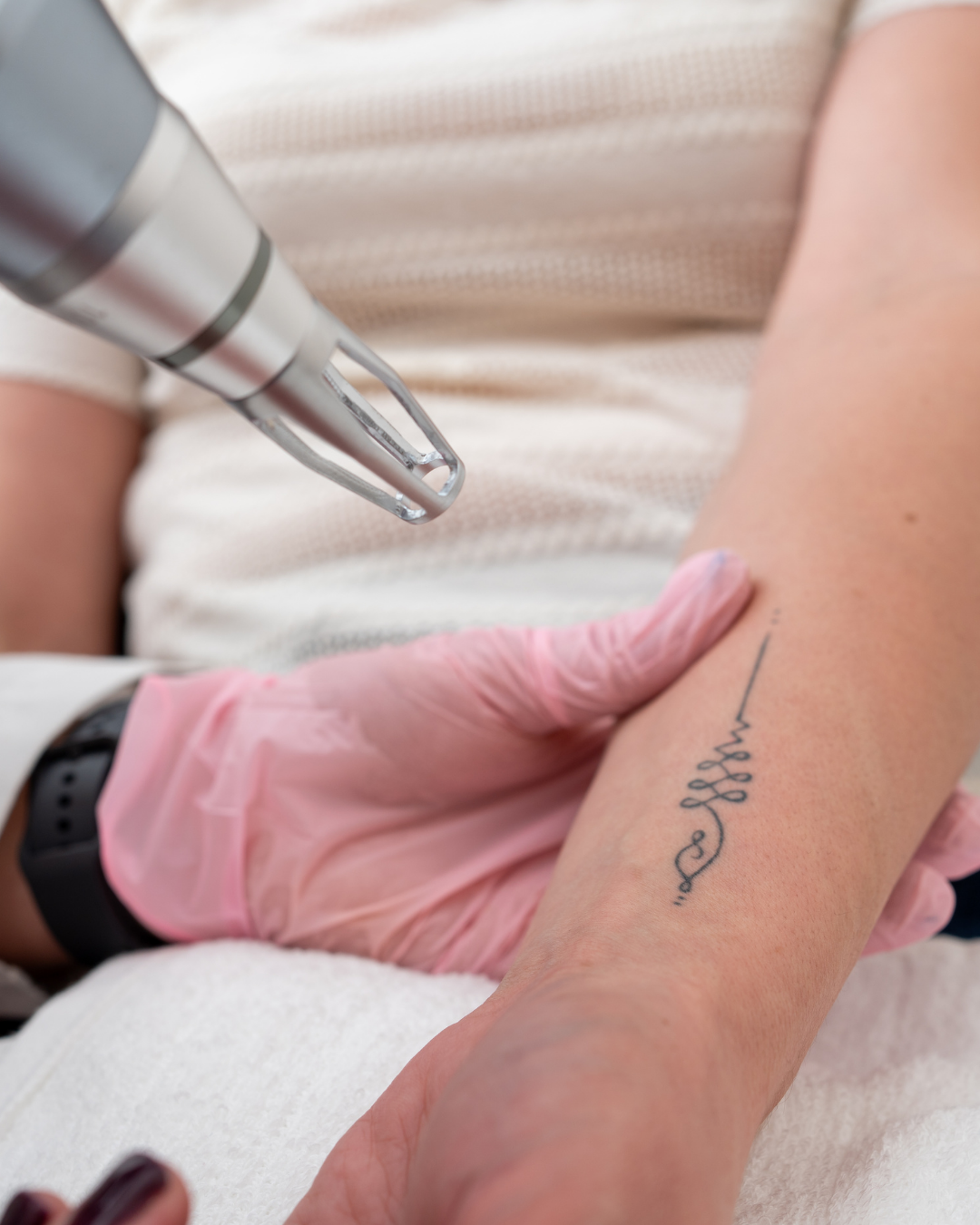
Why Provider Expertise Matters More Than the Laser Name
The laser itself does not determine success — the person operating it does.
Safe, effective tattoo removal requires:
Accurate skin typing
Ink color and density assessment
Proper wavelength selection
Conservative energy progression
Ongoing skin evaluation
Even the most advanced laser can cause complications if used incorrectly.

Skin Tone & Technology Selection
Skin tone plays a major role in determining which technology is safest.
Darker skin tones benefit from longer wavelengths and lower heat transfer
Conservative settings reduce the risk of pigmentation changes
Pico lasers allow greater precision, but settings must still be carefully adjusted
👉 Related education: Tattoo Removal for Dark Skin

Comfort & Healing Differences
Pico laser treatments are often described as:
Shorter in duration
Slightly more comfortable
Associated with faster recovery
However, proper cooling and aftercare are critical with any technology.
👉 Related education: Laser Tattoo Removal Aftercare Guide

Technology Selection at Denver Dream Med Spa
At Denver Dream Med Spa, laser selection is based on:
Tattoo characteristics
Skin tone and sensitivity
Safety profile
Desired outcome
Long-term skin health
We do not default to one laser for every client. Each treatment plan is personalized.
Pico vs Q-Switched FAQs
-
Often, yes — but results depend on the tattoo and skin type.
-
It can be safer when used with proper wavelengths and conservative protocols.
-
No — they are still effective when used correctly and appropriately.
-
Yes. Improper energy delivery increases risk regardless of laser type.
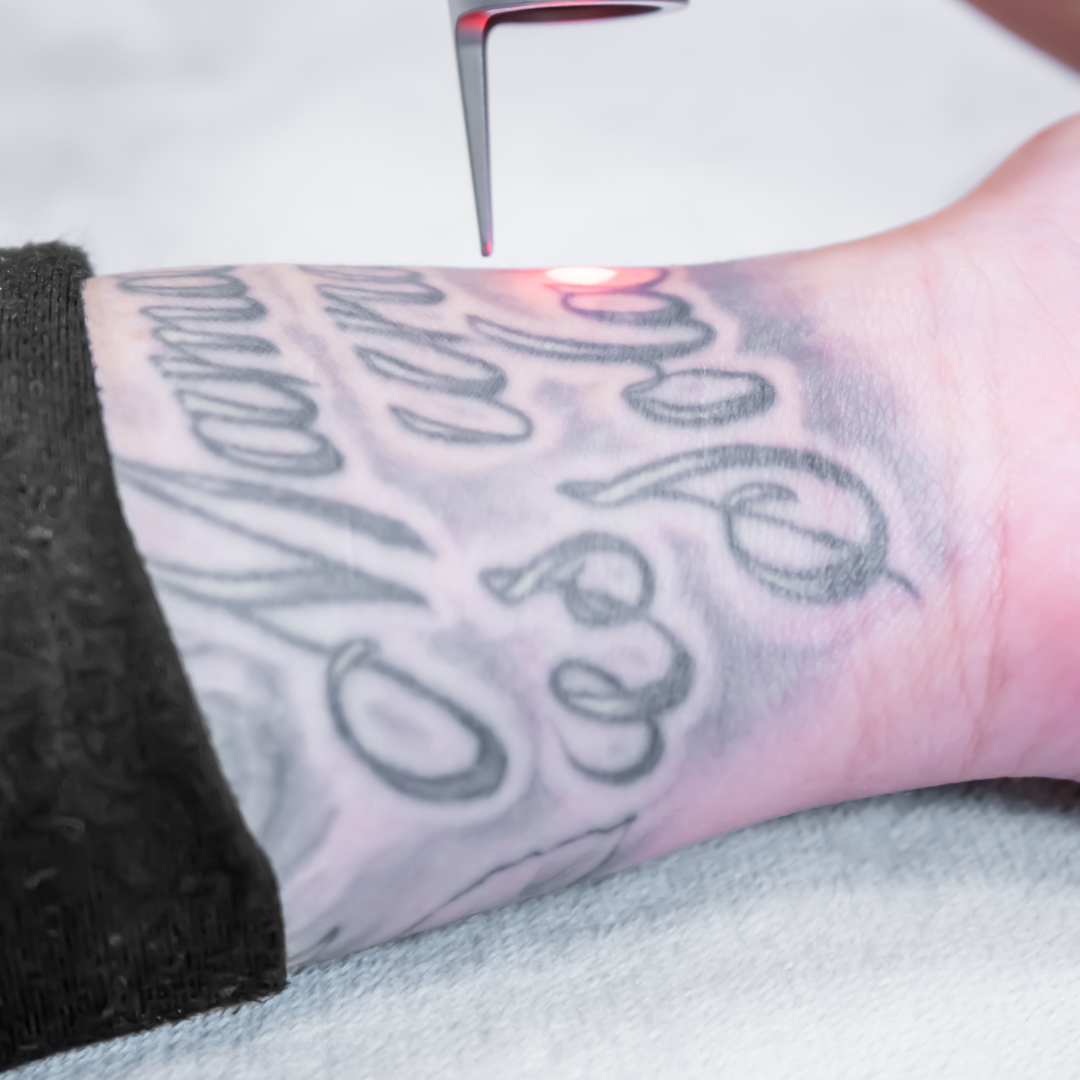
The Bottom Line on Tattoo Removal Technology
Both Pico and Q-Switched lasers are valuable tools when used correctly. The safest and most effective tattoo removal occurs when technology is selected based on skin, ink, and biology — not trends.
At Denver Dream Med Spa, we combine advanced technology with expert judgment to deliver safe, effective tattoo removal tailored to you.
👉 Schedule Your Tattoo Removal Consultation in Denver
We’ll evaluate your tattoo and skin to determine the safest, most effective technology for your goals.
Laser Education

The Fitzpatrick Skin Typing Scale

Laser Tattoo Removal Cost & Pricing in Denver

Advanced, Safety-First Laser Tattoo Removal for Deeper Skin Tones

Best Tattoo Removal Technology: Pico vs Q-Switched

Laser Tattoo Removal in Denver Dream Medspa

Tattoo Removal for Sensitive Skin

How Laser Tattoo Removal Works (Complete Guide)

Join the Denver Laser Tattoo Removal Club

Laser Tattoo Removal Aftercare Guide

Join the Denver Laser Hair Removal Club